veterinary manager
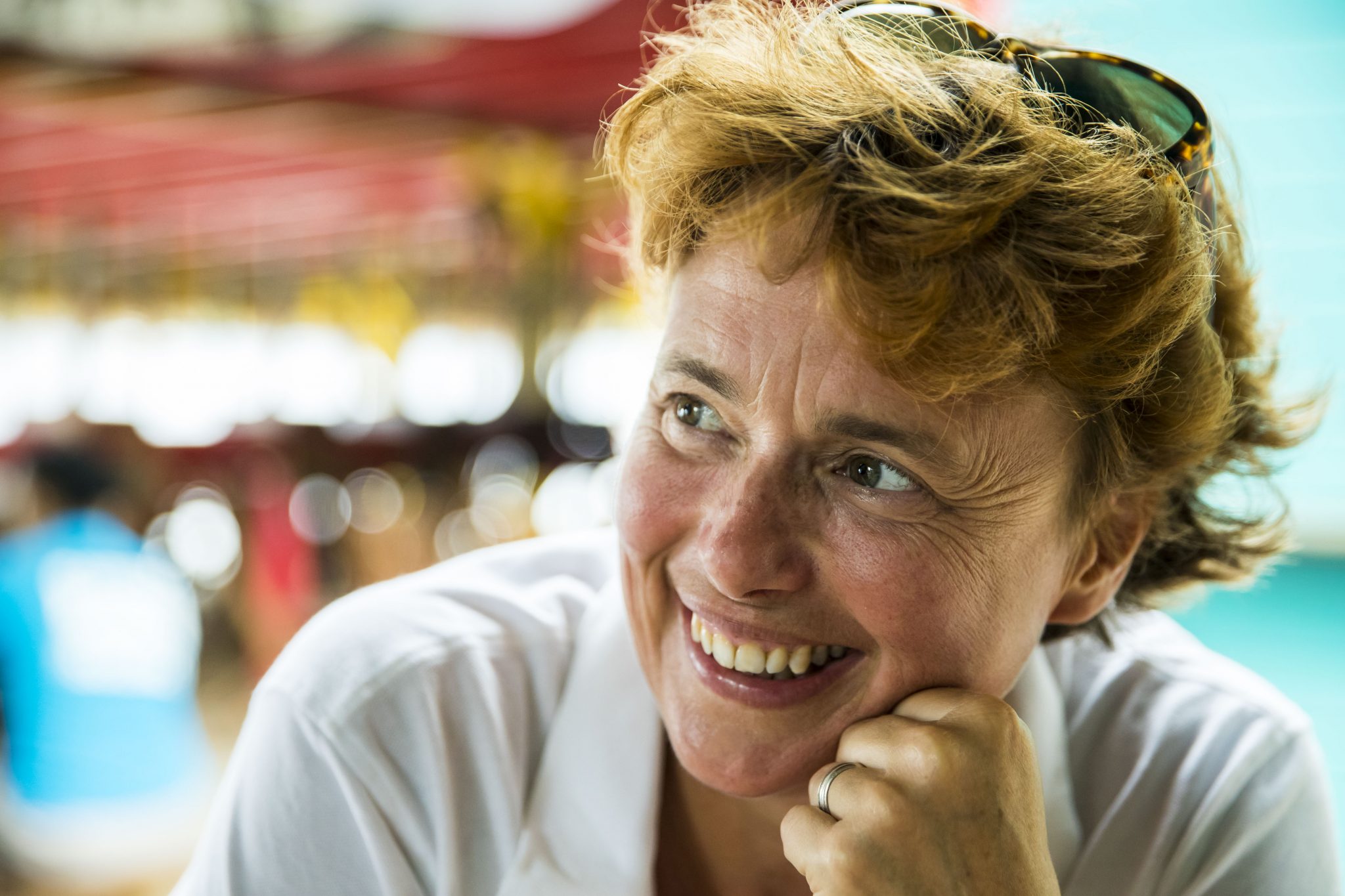
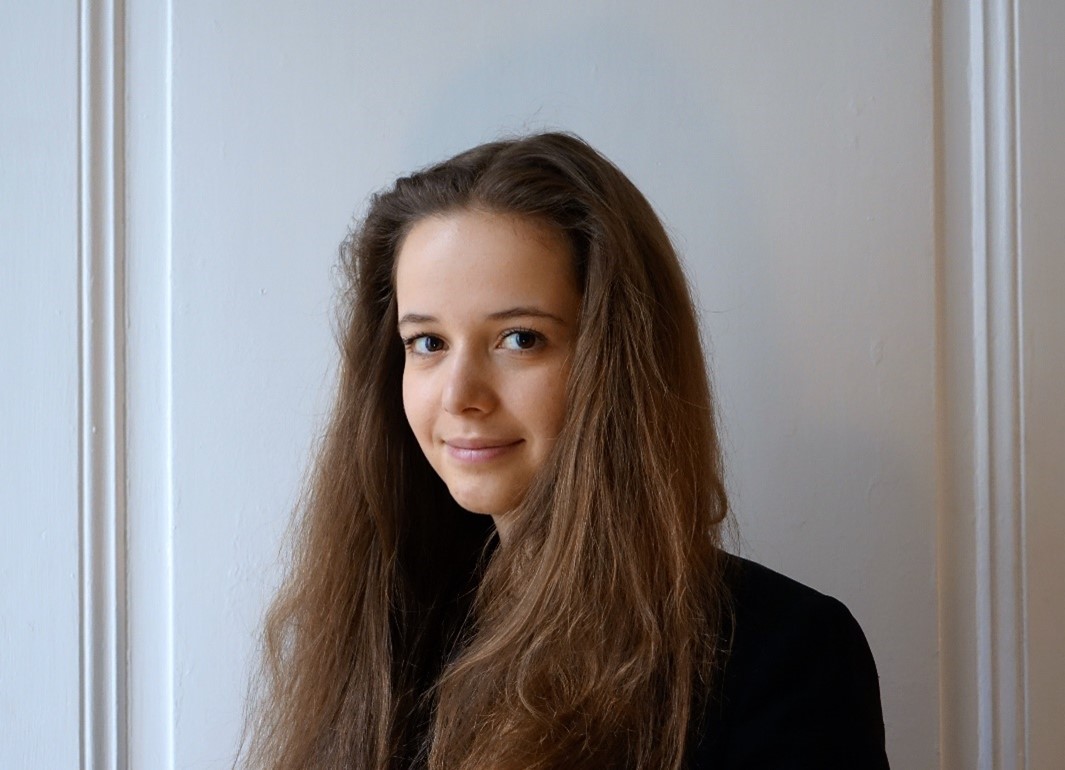
PORTRAIT : STEPHANIE ORTENGO, VETERINARY MANAGER
A little girl's dream
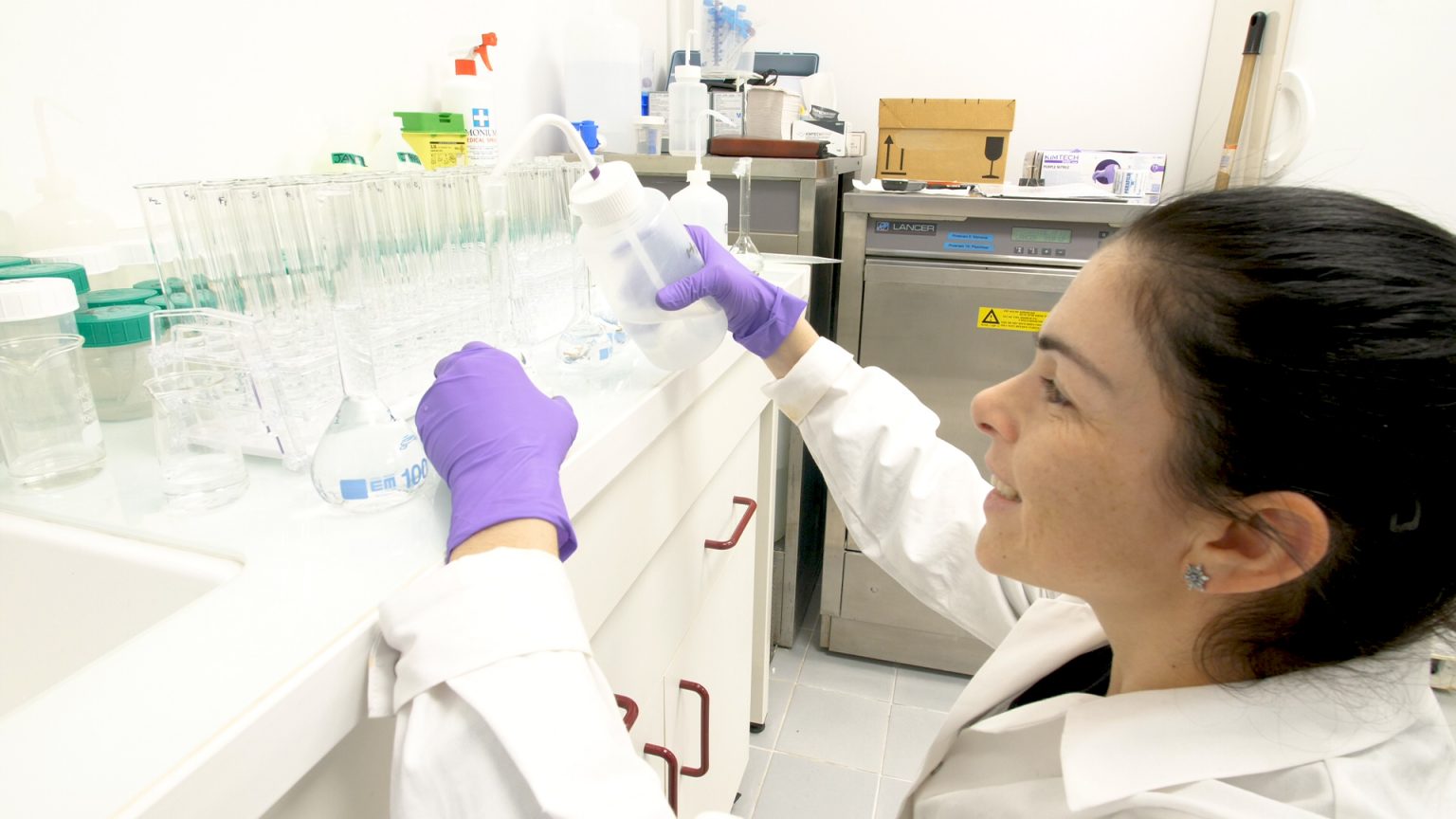
“My initial goal was to be a veterinarian, developing new treatments/medical tools for marine animals.
For this, my BTS allowed me to learn the largest panel of laboratory analysis so I went for it!
I then had to work in a laboratory after my degree before continuing my studies and no longer having the courage to go back to long studies, I opted for my master’s degree which brought me closer to marine animals.”
TAKING CARE OF OUR RESIDENTS
“To my amazement, things happened naturally within the Museum so that my daily life was dedicated to analyses allowing the monitoring of water parameters but also more recently to the monitoring of the health of our boarders by integrating veterinary care.”
my training
- Scientific baccalaureate
- BTS biochemist
- General Licence Life Sciences
- Master 1 Oceanography
- Master 2 pro Marine Environment
a profession in constant evolution
“I have recently been able to develop new tools such as antibiograms and analysis of bacteria found in the blood of sick animals and I hope to have the chance to continue on this path.”
Becoming an aquariologist
- Home
- Professions
#Aquariologist - Aquarist
Alexandra, aquarist
My tasks and activities
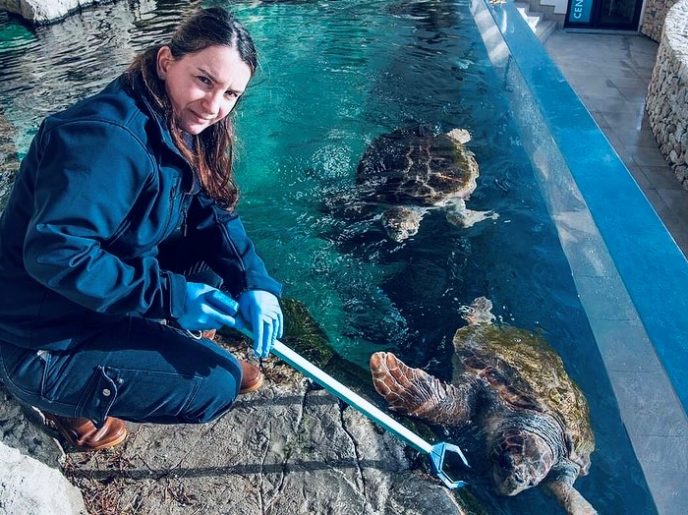
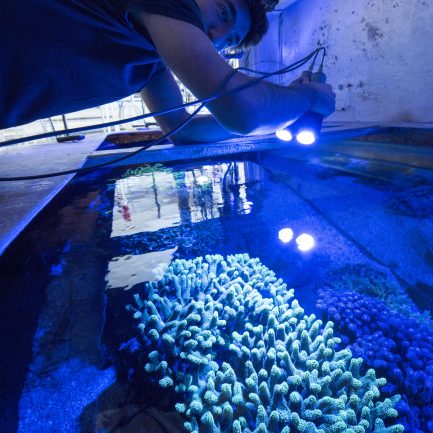
“I am in charge of feeding the animals but also of the maintenance of the ponds with the maintenance of the filtration, cleaning of the windows, making and cleaning of the decorations, cutting and cultivation of the corals…
I am also in charge of land and sea turtles (I have a French green card to take care of injured turtles) as well as stocking and management.”
Training
- BTS Aquaculture
- Licence Pro Aquaculture and Aquariology
Aquariology, a team effort
In a public aquarium, the team in charge of managing the living displays is generally made up of a more or less large number of aquarium technicians and a team leader appointed as the aquarium’s manager or curator.
Regardless of their level of expertise and responsibility, and regardless of their position in the hierarchy, the team members share the same passion, that of the aquatic fauna and flora. They pool their skills and know-how to serve their missions of education, research and conservation of species and natural environments.
What does an aquariologist’s job involve?
Manipulation and observation of living organisms are an essential basis. The interior of the aquariums is not just a decoration. It is a true to life ecosystem where flora, invertebrates and vertebrates cohabit. The aquarist has an important knowledge of the biology of living creatures and knows their way of life perfectly. Good observers, they know how to interpret the behaviour of organisms and match their living conditions to their needs (water quality, scenery, current, light, food, cohabitation with other species).
What training?
The profile sought is a technician or project manager level, which corresponds to a baccalaureate level (Bac+2, Bac+3 or Bac+4).
Various schools and universities, such as the Centre régional universitaire de la formation permanente de Montpellier (CREUFOP), the University of Nancy, the Institut des Sciences de l’Environnement & des Territoires d’Annecy (ISETA) and the Institut national des sciences et techniques de la mer de Cherbourg (INTECHMER) deliver these diplomas.
Scuba diving experience is often helpful. If some candidates already have the certificate of aptitude for hyperbaric work class 1 mention B, the others can follow a training course and obtain this qualification after the hiring, subject to the required medical aptitude.
The French legislation being very strict in this matter, this diploma is essential for dives in aquariums (cleaning of windows, structures and decorations, introduction of new specimens, etc.) or at sea within the framework of observation or collection missions.
When hired, other qualifications may be of interest to the employer, such as a driver’s license, first aid certificate, boating license or the ability to speak one or more foreign languages.
What is a typical day in the life of an aquariologist?
To become the manager of an aquarium, one must hold a certificate of competence, which is not a diploma, but an administrative authorization granted to a person to exercise this responsibility, this certificate constituting the proof of his competence to present living collections to the public.
Aquarium technicians or persons other than the person in charge may hold a certificate of competence. This is the case when they are competent to manage a part or a category of living collections. This situation often occurs in large structures where the Aquarium is divided into several areas or sectors.
The candidate must submit his file to the Direction départementale des services vétérinaires (DDSV) of his department. After the file has been examined, the candidate presents it to the advisory committee.
What is a typical day like for an aquarist?
His daily tasks include, of course, the care of the various species, but also the maintenance of the tanks and technical installations, the cleaning of the windows and walls – from the surface or by diving -, the inspection tour, the breeding, the harvesting in the natural environment and the processing of biological and technical data. He is also responsible for checking and maintaining the many devices required for the proper functioning of the tanks: pumping systems, filtration, thermoregulation, sterilization, etc.
Related trades
The same studies or training courses can thus lead to the exercise of different but nevertheless related professions, which present on the technical level or on that of knowledge of many similarities; the field of continental or marine aquaculture, that of the pet shop in store or large surface but also the professions resulting from the training courses in marine biology make it possible to assuage a basic passion common to all these fields; to take care of the aquatic living beings.
See also
Policy Officer for Oceans Policy
portrait: Corinne bussi-copin, Policy Officer for Oceans
“I joined the Oceanographic Museum of Monaco, where I was trained in scientific mediation and in welcoming the public.
After more than 20 years in the same structure, I am now in charge of the Ocean scientific advisor.
At the crossroads of scientific popularization, pedagogy and animation, I coordinate thematic programs and the development of awareness-raising tools for different audiences.”
Training
- After training as a Marine Technician
- a master’s degree for professional purposes
- after obtaining 2 DEA in oceanology and modelling and after some experience in laboratory work
Knight of Maritime Merit
The Oceanographic Institute is proud to have a recent medalist on its team! Corinne Copin has just been awarded the very honourable title of
“Knight of Maritime Merit”.
THE JOB IN PICTURES
A career as a diver?
- Home
- Professions
Diving, a working tool
Diving is a word that can make you dream, evoking sun, salt water and holidays. It may be attractive to make it a career, but is it really the job you think it is?
In the professional field, diving is a working tool. Being a diver means working underwater, whether you are a welder, a deminer, a sportsman or photographer, or a recreational diving instructor.
In France, diving is generally learned in clubs approved by the French Federation of Underwater Sports (FFESSM). It takes several years of practice to reach a safe level and enough experience to minimize the risks. If you wish to make a profession out of it, you must become an instructor holding a state diploma of sports educator, option subaquatic diving (BEES) delivered by the Ministry of Sports.
Whatever the job you will do underwater, you must hold a hyperbaric certificate (CAH) specific to your working conditions, i.e. mentioning the nature of the activity underwater (mentions A, B, C, D) and the maximum depth of intervention (class I, II, III).
Certificate of fitness for hyperbaric conditions
The practice in hyperbaric environment is extremely regulated: the decree 90.227 of March 28, 1990 and the order of January 28, 1991 define the modalities of safety training of the personnel intervening in hyperbaric operations.
Mention
Class
- The CAH mention A concerns the activities of diver (civil engineering, maritime, oil or industrial works).
- The CAH mention B concerns underwater activities, for workers whose main profession is not to carry out underwater work, but who practice their jobs in immersion (oceanographers, biologists, archaeologists, photographers, cameramen, aquaculturists, etc.).
- The CAH mention C groups the activities of medical hyperbarist for the personnel assigned to the implementation of medical hyperbaric installations such as doctors, nurses, etc.
- The CAH mention D groups together the other activities, in particular those of the personnel intervening in hyperbaric environment without immersion (welder and tubist, diver in experimental simulation in dry environment).
- CAH Class I: for working within 40 meters
- CAH Class II: for working within 60 meters
- CAH Class III: for working beyond 60 meters
Working in a hyperbaric environment
Professional divers or scuba divers are generally holders of a CAP (welder, mechanic, electrician or others) who have undergone specific training to obtain the hyperbaric aptitude certificate (CAH).
They can work in an underwater environment to carry out civil engineering operations as well as maritime and port work. These specific training courses are provided by the National Institute for Professional Diving (INPP), the only body in France approved by the Ministry of Labour. The other organizations offer these courses under the supervision of the INPP. They are often expensive and may be covered by various state agencies. Some companies tend to recruit people with technical training in the field they are interested in (construction, mechanics, etc.) and have them undergo hyperbaric training if necessary.
Sport and leisure diving
The diplomas allowing to work as a diving instructor are delivered by the Ministry of Youth and Sports.
Since 2001, the professional diploma of youth, popular education and sport (BP JEPS) of level 4 (IV; baccalaureate) replaces the BEES. The BPJEPS is issued for a speciality (socio-cultural leader or sports educator).
As far as diving is concerned, there are 2 options:
- BPJEPS option A “in scuba
- BPJEPS option B “without diving suit”.
To prepare the different levels to reach in order to apply for the BPJEPS, inform yourself in one of the 2 200 clubs or schools of the FFESSM.
It is also necessary to hold a sea card or a motorboat driving licence, the First Aid Training Certificate (AFPS), the Additional First Aid Training Certificate with equipment (AFCPSAM) issued by the Ministry of the Interior, the fire brigade, or by specialised associations.
The State Diploma of Youth, Popular Education and Sport (DEJEPS, level III qualification) attests to the acquisition of a qualification in the exercise of a professional activity of coordination of several facilities and educational supervision in the fields of physical, sports, socio-educational or cultural activities.
The Higher State Diploma for Youth, Popular Education and Sport (DESJEPS, level II qualification) attests to a professional qualification for the design, implementation and management of animation and development policies conducted with or from sports, social, educational or cultural structures and allows access to positions as local or national development project manager or director of several social facilities.
As far as diving is concerned, you can find information on the website of the professional association of diving instructors, the Association nationale des moniteurs de plongées (ANMP).
Scientific diving
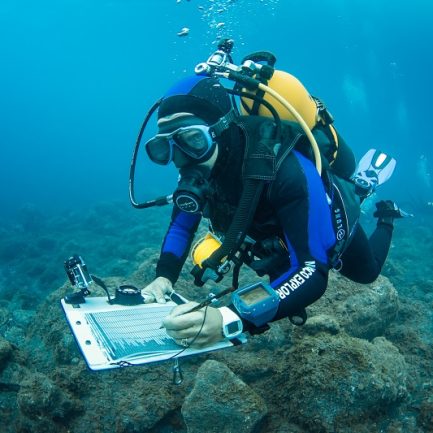
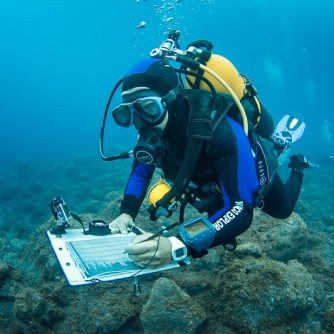
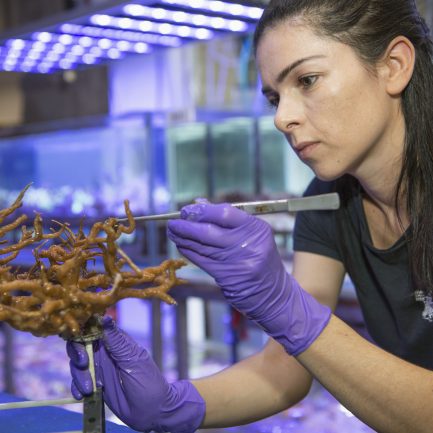
Scientific diving is any diving in the marine or continental environment for the purpose of collecting data, samples or information for research or educational purposes. It concerns all persons whose main profession is not to carry out underwater work permanently, but who may need to immerse themselves occasionally or regularly to practice their research. This is the reason why scientific diving is covered by the mention B of the certificate of aptitude for hyperbaric diving (CAH), generally a CAH of class IB is sufficient.
Since 1979, COLIMPHA, the French association of scientific divers, has been working to ensure that scientists receive training adapted to their needs in the context of their research work. It has set up training courses that are currently managed by the Institut national des sciences de l’univers (INSU). Under the aegis of the latter, several structures are in charge of organising these training courses, generally intended for scientists already working in research organisations.

Since 1999, there is also a National Scientific Diving Committee (CNPS) in charge of promoting information on scientific diving. This inter-agency committee brings together all the public research and teaching establishments that use diving as a scientific tool.
Military diving
The army offers different types of contracts: short contracts of one to three years or long contracts of eight to ten years (renewable). Once recruited, personnel undergo initial training specific to their corps and then specific training for their chosen profession. For those who want to become divers, the selection remains difficult. The training is provided by the military diving school of Saint-Mandrier in the Var.
The clearance diver in the French Navy searches for and neutralizesexplosive devices detected at sea, in ports, on military grounds or on beaches. In addition to his demining activity, he must also perform various underwater tasks such as welding.
Since 2002, the French Navy has been recruiting volunteers for the clearance diver speciality by direct application and has recently set up a preparatory training course for the professions of shipboard diver and mine clearance diver in the French Navy at the Lycée Simone Weil in Conflans-Sainte-Honorine. This is open to anyone aged 18 with a baccalaureate and allows you to sign a one-year contract with the French Navy to become a diver, or even, for the most successful, a clearance diver.
See also
Managing the shoreline
- Home
- Professions
What jobs for the coast?
The coastline is the area where the land, sea and atmosphere come into contact, and includes the backshore and foreshore. This geographical area, where three different physical environments interact, with their own specificities, is subject to the constraints of tourist, economic and demographic pressures.
The maritime professions, like the professions linked to the environment, have a false image. For most of us, they are synonymous with field work, close to nature. Seventy-five per cent of jobs in the environmental field are in water and waste management and pollution treatment: sanitation, purification, water and fluid treatment, cleaning of beaches and water bodies, monitoring, laboratories and measuring equipment, combating hydrocarbons and polluted sites, etc. And there are many channels…
Towards multidisciplinary training...
The study of these environments requires scientific knowledge in biology, physics, chemistry, geology or oceanography, but also knowledge of geography related to man and his activities. This is why there is no specific training for coastal management.
Many general courses related to the study of environments, planning, the environment and the treatment of pollution lead to jobs in this field. In practice, choosing a field and a level of study implies a thorough reflection on one’s motivations and abilities.
In addition to training in oceanography, which includes biology, chemistry, physics and geosciences*, there are other paths, such as geography and regional planning, law and economics of the sea and the environment, pollution treatment and ecotoxicology, not to mention the disciplines of scientific and technical culture such as animation and environmental protection.
A la carte modules offered at a distance...
by the UN e-SEA digital university of marine sciences. The
University Certificate in the Prevention of Environmental Risks related to Maritime Activities
This course, specially designed to be taken in parallel with another activity (employment, studies), aims to understand and apply in an autonomous way the regulatory texts and legal instruments intended to prevent environmental risks related to maritime activities.
Shaping a unique path: Claire, UN e-SEA registrant
Claire was planning to work in scientific communication concerning the preservation of the marine environment. After a Bachelor’s degree in English and a Master’s degree in European and International Studies at the Sorbonne nouvelle, Claire wanted to acquire legal knowledge on the impact of human activities on the ocean and the existing prevention tools. With this in mind, she turned to the University Certificate “Prevention of Environmental Risks related to Maritime Activities”, which she took entirely by distance learning with UN e-SEA and validated on 10 October 2019. With this new diploma, this Anglican now wishes to put her skills at the service of the preservation of the marine environment and the prevention of risks on a European scale.
See also
Farming the products of the sea
- Home
- Professions
#AquacultureTechnician
Jean, aquaculture technician
My tasks and activities
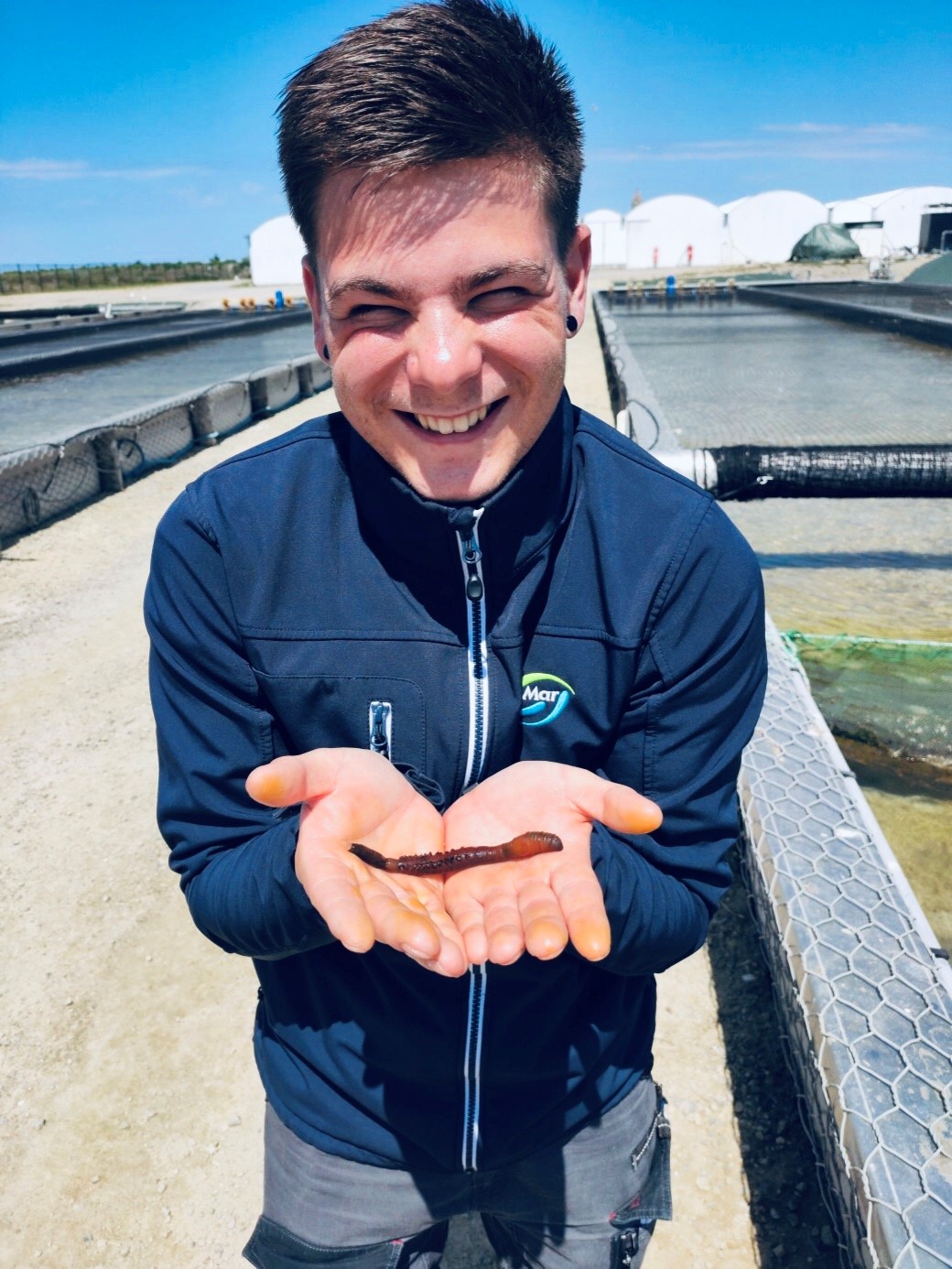
“The marine biotechnology company Hemarina has developed oxygen carriers derived from the haemoglobin of a marine worm, called an arenicole. The blood of this marine worm is very useful in medicine, especially for grafts. The Marine Farm in Noirmoutier where I work breeds the worms needed to make it.
I work on various tasks related to the production of marine worms: from the hatchery (broodstock, larvae), to the grow-out and packaging of the worms. I also work a lot with the quality department: as the finished product is intended for patients, I have to record and control everything I do because traceability is essential. I may also be required to perform maintenance on the infrastructure.
If I’ve learned one thing in my job, it’s that you have to be versatile and interested in everything to be able to move forward!”
Training
- Technical framework for the production and development of marine resources – Cnam-Intechmer
Exploiting sea products, which jobs?
Behind the exploitation of sea products, there are several trades and many skills. Each stage from producer to consumer leads to a different sector, with its own trades. The development of seafood products and their processing is part of the agri-food sector.
But the collection or breeding of seaweed and marine animals (seaweed, fish, shellfish, crustaceans…) are practiced by fishermen, aquaculturists, shellfish farmers, seaweed farmers.
These occupations cover different realities depending on the type of fishing practiced or the species raised, the size of the boat or the farm.
These are jobs that require good physical health and versatility.
Which schools and training courses?
In France, it is the maritime and aquaculture high schools and some vocational high schools coordinated by the Ministry of the Sea, which offer appropriate training. You can enter after the third year of secondary school, but there are also organisations that offer continuing education courses, such as the Centre européen de formation continue maritime (CEFCM). Theoretical courses alternate with practical training at sea.
Some agricultural high schools offer training in aquaculture (usually freshwater).
Seafood training courses
Portraits of professionals Seafood
See also
Marine technology
- Home
- Professions
What technology for marine science?
Exploration, monitoring and exploitation of the marine environment require high-tech instrumentation. From measuring the physical and chemical properties of the oceans to sampling, the equipment is increasingly sophisticated.
New means of investigation are constantly influencing the various sectors of oceanographic research and scientists are moving from observation to modelling, which requires new measurement systems. Marine technologies such as ships, underwater devices and various instruments support scientific disciplines such as geosciences, marine biology and chemistry and physical oceanography.
These technologies are based on the field of engineering sciences as complementary as optics, acoustics, mechanics, electronics, robotics and telecommunication or communication by optical fibres.
In addition to the major French research and development organizations such as Ifremer, CNRS and IRD, there are many high-tech companies working in the development of oceanography such as computer science, instrumentation, etc.
What curriculum?
The classic courses of study to be favoured after the baccalaureate are physics, mechanics, electronics and telecommunications… either in IUT, or in engineering schools, or at the university in the Engineering Sciences field.
These technical courses are not necessarily specific to the marine field, but they have applications in maritime transport, offshore oil, defence, oceanographic research, living resources, coastal engineering, etc. There are opportunities because even if you do not join a company specific to the marine environment, your knowledge can be applied in other fields.
Some specialized engineering schools
Strictly speaking, there is no engineering school specialized in oceanic and marine engineering, except at the University of Toulon, in marine engineering. But many engineering degrees allow you to work in the field of marine sciences, just as many Grandes Ecoles have advanced courses related to the marine environment.
Distance learning in marine technologies
You wish to become a project manager or a project manager in offshore construction, a maritime and river engineering manager, or a supervisor of offshore or coastal construction sites.
UN e-SEA, the digital university for marine sciences, offers you the opportunity to follow the courses of the master’s degree in distance learning Master of Marine Technology, Maritime Public Works course, e-learning maintenance and to be trained in the specificities of construction in a maritime environment (bridge, port and dyke, offshore platform or wind turbine, etc.).
The courses are available online, using a training platform accessible by computer, tablet or phone. Users follow courses, news, documentary resources, virtual classes, carry out exercises, build projects and submit their work.
Portraits of marine technology engineers
See also
Becoming an oceanographer
- Home
- Professions
#LamberTrades #GeneralSecretary
Loreley, Corporate Secretary
My tasks and activities
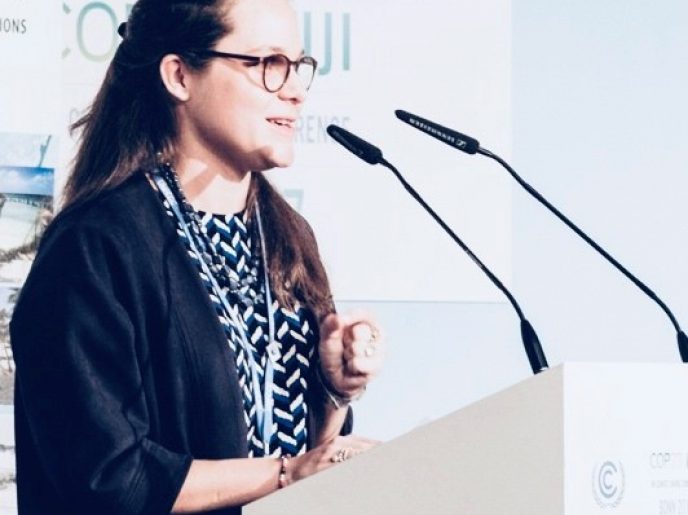
“I work for the Ocean and Climate Platform, at the interface between science and policy for a better integration of ocean-climate-biodiversity issues in national and international public policies. In particular, I coordinate the advocacy actions of the Ocean and Climate Platform, and the monitoring of international conventions on Climate (UNFCCC) and Biodiversity (CBD). I work closely with civil society actors, scientists, and governments at national, European and UN levels.
I also lead the Alliance of Ocean and Climate Initiatives which federates ocean-based solutions for climate change mitigation and adaptation.”
Training
- MSc in Environmental Policy and Regulation from the London School of Economics, UK
- BSc in Environmental Economics and Management from the University of York, UK
- Scientific Baccalaureate, Physics and Chemistry Specialty, France
Environmental science management or political science
Law, economics, management… many skills can be applied to the environmental and oceanographic fields.
SKEMA Business School’s BBA program offers international post-baccalaureate training (BBA degree) with dual skills in science and management of the marine environment to open up employability in the public and private marine sectors, from research to entrepreneurship. The last year of the programme can be shared with the first year of the MSc. MARRES at Université Côte d’Azur, where students can continue into the 5th year (master’s degree).
The Université Côte d’Azur’s MARRES program offers training courses combining science, conservation and the development of marine resources. The MSc. MARRES (Master’s degree) offers, in 2 years and entirely in English, an international and interdisciplinary experience to open up employability in scientific research, conservation, work in design offices, in industry, or to launch one’s own business in blue growth.
Schools of political science as well as certain masters in environment offer the possibility of a career in the world of the sea and the environment at the interface of hard sciences, social sciences and public policies.
See also
See also
Becoming an oceanographer
- Home
- Professions
#SeaTrade #Oceanographer
Claire, oceanographer-engineer
My tasks and activities
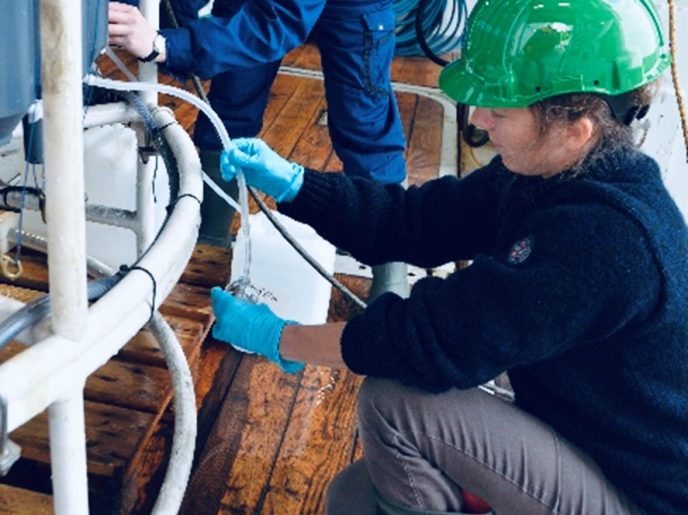
“I am an engineer at the Institute of Marine Research, Department of Oceanography and Climate, in Tromsø, Norway. I run the Ocean Acidification laboratory. With my team, our main mission is to monitor ocean acidification. We carry out numerous analyses such as DIC (Disolved Inorganic Carbon), water alkalinity, hydrogen potential (pH), dissolved oxygen (Winkler’s method)… I am also in charge of deploying the instrumentation equipment before the oceanographic vessels embark, in particular sensors measuring pCO2, a technique used, for example, for mooring. In parallel, I participate in workshops to test and exchange on the performance of different instruments and sensors used. I will soon be attending the ICOS-OTC pCO2 inter-comparison conference in Belgium in 2021.
I am also involved in a training project that I really enjoy: “Tropical Nansen Legacy”. The objective is to train in good sampling and analysis practices in developing countries. Thanks to this project, I was able to travel to Senegal, Mauritania, South Africa and next year I will participate in campaigns in the Indian Ocean. Another part of my job is to support the lab manager on the safety conditions of the laboratories and the good management of chemicals. To conclude, throughout the year, I work mainly in the laboratory, I take part in a few 3-month sea campaigns per year. I like the possibility of working on very different projects. It is a very rewarding job.”
Training
- Master of Science in Oceanography with specialization in Marine Biogeochemistry (M.Sc), ISMER UQAR, Rimouski, Québec, Canada.
- Bachelor of Science in Earth and Environmental sciences (B.Sc.), EPOC, Bordeaux University, Talence, France.
- Bachelor of Science in Oceanography with specialization in Environmental Science (B.Sc.), INTECHMER, CNAM, Cherbourg, France.
Justine, marine mammal observer
My tasks and activities
“My work consists on the one hand of visually observing and photo-identifying the presence of marine mammals and protected species in a specific area during the seismic activity of the ships. On the other hand, to identify the interested species and to study their behavior, distribution and environment.”
Training
- Licence Biology (life sciences)
- Master BEE (Biodiversity, Ecology, Evolution)
- MMO (Marine Mammals Observer) certification training
Johan, paleoclimatologist and paleoceanographer, teacher-researcher
My tasks and activities
“My work consists of studying marine and lake sedimentary archives, from the bottom of oceans or lakes, in order to better understand past climate variations and to better predict future ones.
I am mainly interested in the behaviour of certain molecules, such as lipids, produced by phytoplanktonic organisms or plants.
The study of these molecules, which I find fossilized in the sediments, allows me to reconstruct over time the changes in temperature, precipitation or even ice cover in several regions of the world.”
Training
- DEA (Diplôme d’études approfondies) Environnement Océanique Littoral et Hauturier, University of Bordeaux – now equivalent to Master 2 Sciences de la mer
- Master’s degree in Environmental Sciences, oceanography option, University of Bordeaux – now equivalent to Master 1 in Marine Sciences
- Licence des Sciences de la Terre et de l’Univers, Université du Québec à Montréal (UQAM) – now equivalent to Licence 3 Géosciences et Environnement
- DEUG of Earth and Universe Sciences – equivalent today to Licence 1 and 2 Geosciences and Environment
How to become an oceanographer?
Oceanography or oceanology?
Oceanography concerns the knowledge and theoretical understanding of processes and phenomena and brings together several disciplines: biology, physics, chemistry, geology…
Oceanology groups together all human activities related to oceanography: prospecting, exploitation, resource management…it is rather the application of theoretical knowledge to economic and social realities.
An oceanographer spends little time at sea on scientific missions. His work consists of conducting experiments in the laboratory, processing data in front of his computer, and sharing these results by publishing and participating in conferences.
Often researchers from different disciplines come together to work on a common research program. Each person conducts experiments in his or her own area of expertise and the results are then interpreted together, as the phenomena and processes often interact with each other.
Required qualities: be a specialist, while knowing well the generalities of oceanography; be highly motivated; have a taste for research; ability to work in a team; English required.
Possible short courses
After the baccalaureate, independently of the aquaculture baccalaureate +2, there are currently two short courses in France for technicians specialising in oceanography.
INTECHMER
(Cherbourg)
University Littoral Côte d'Opale (Boulogne/Calais)
Choose the university...
Start with a Bachelor’s degree (bac+3) in science (either material sciences, mathematics and physics to do physical oceanography, or natural and life sciences to do biological oceanography).
It is generally only after the master’s degree (bac+4) that specialization in oceanography, physics, chemistry-physics or biology of populations and ecosystems or environmental sciences begins.) Finish with a doctorate that will give you the title of Doctor of Science in your specialty.
The Marine Universities network presents teaching and research in the fields of the sea and the coastline and in multidisciplinary fields offers a catalogue of masters in oceanography in various disciplines.
... or opt for engineering degrees!
Another possible route for marine biology is to obtain a degree in agricultural engineering. Some schools, such as Agrocampus Ouest, have a Marine Sciences course.
While SeaTech – University of Toulon’s engineering school offers training in marine engineering.
Many so-called general engineering degrees have a specialization in the 5th year that can lead to a profession related to the sea (remote sensing, electronics, physics, chemistry, water or environmental engineering, agronomy or veterinary).
Management of environmental sciences or transversal professions
Documentary filmmaker, librarian, journalist… many jobs can be grafted onto the specific jobs in the world of the sea. Research organizations and other institutions are recruiting HRDs, communications managers, graphic designers, IT specialists, etc.
Skema Business School offers a degree in Environmental and Marine Science Management.