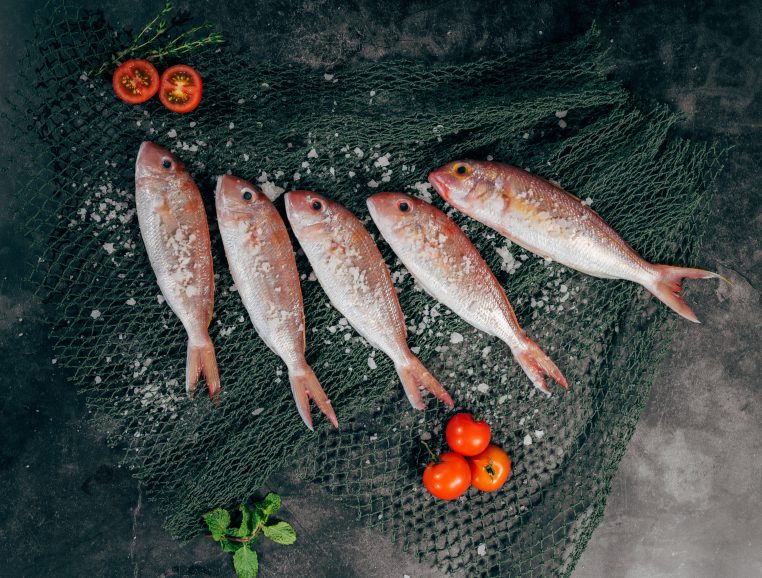
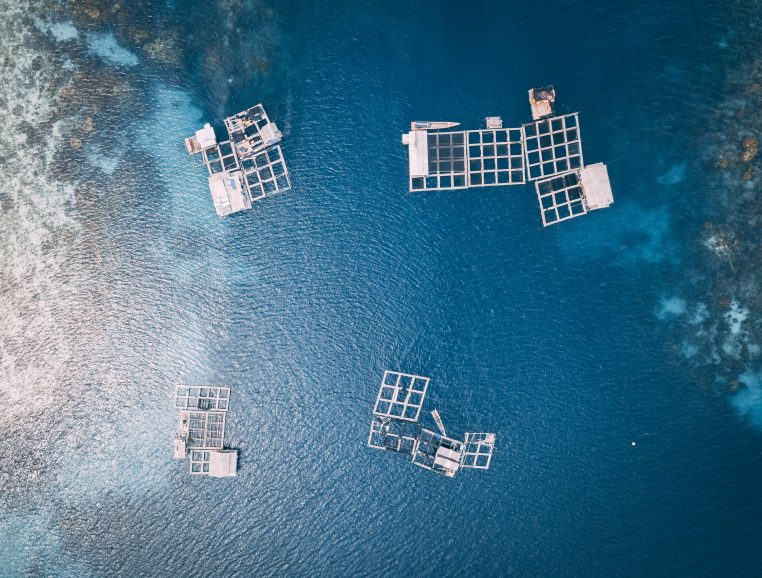
A third of the world’s oceans are being overfished, and fish consumption has never been higher: we are reaching the limits of the protein resources in the sea, despite these resources being essential for millions of people around the world. However, sustainable and well-reasoned fishing is possible, and would leave enough fish left in the ocean, respect marine habitats and allow people who rely on fishing to make their living from it.
FISHING AROUND THE WORLD
1%
FISH STOCKS ARE OVERFISHED AROUND THE WORLD
1%
FISH STOCKS ARE FULLY FISHED AROUND THE WORLD
1%
FISH STOCKS ARE UNDERFISHED AROUND THE WORLD
Source: FAO
It is easier than ever to consume sustainably by varying which species you eat, avoiding rare or threatened species and buying from fisheries that care about the future of the sea.
You should also purchase produce caught locally where possible, as this not only preserves the planet but also supports local fishermen.You can find more information in the user guide from the MSC (Marine Stewardship Council) label as well as from Mr Goodfish, an initiative supported by the Prince Albert II Foundation.
Aquaculture represents the source of around half the fish we eat (sure? I would have said a third…). This is why the ASC (Aquaculture Stewardship Council) label was created in 2010, for fish farmed sustainably. This label has been awarded to 9 species of fish farmed via aquaculture, including salmon, tilapia, trout, pangasius and prawns, as well as marine algae. It also guarantees that the fish was farmed in an environmentally friendly manner and under good working conditions. These labels mean that everyone – distributors, fishermen and consumers alike – can act at their own level.
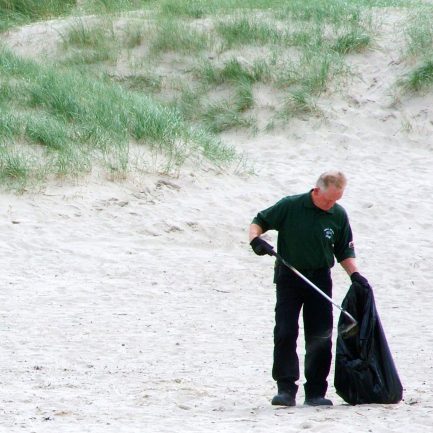
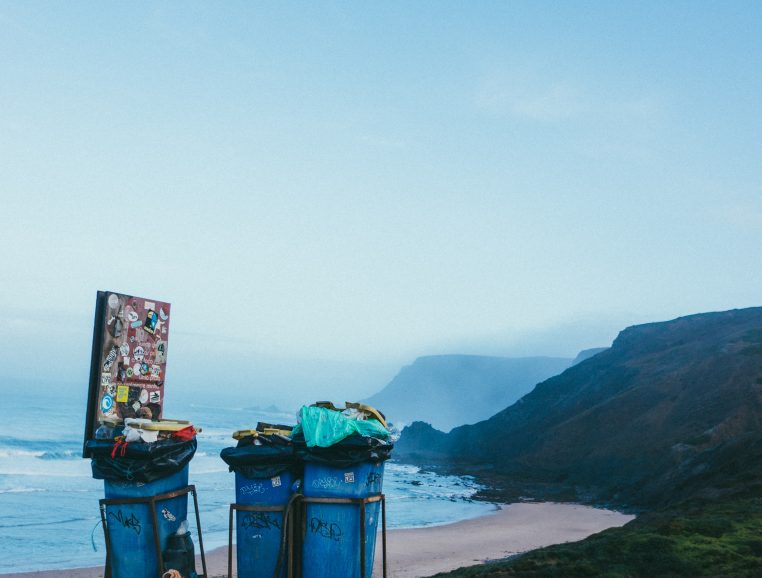
A majority of the waste that goes into the ocean comes from inland. We are all confronted with it on a daily basis: in front of our homes, on the way to work or school, when shopping, at the beach, on a walk… If picking up other people’s rubbish doesn’t seem rewarding to you, think again: doing it gives you a real sense of satisfaction, a deep feeling of usefulness and even a certain pride. And it only requires a minimum of organization (a glove permanently in the bag or the car, a collection bag…) and a bit of willpower…
AVOID GENERATING WASTE
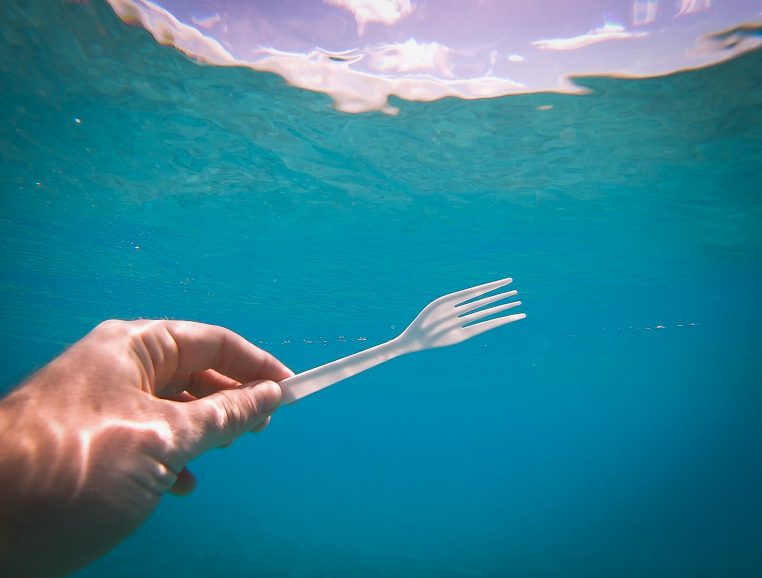
Because the best type of rubbish is the type you don’t produce, the challenge is to get into the habit of refusing everything you don’t need, such as plastic bags, straws and plastic plates, and above all disposing of them into the right bins where available.
pick up ANY WASTE you see
Picking up and collecting rubbish is one way of doing your part and acting to protect nature at your own level. Have you heard of “plogging”? The term comes from the Swedish “plocka upp”, meaning ‘to pick up’, and “jogging”. It is where you go jogging and pick up rubbish on your way! In France, there are platforms for people who want to run together. You can also pick up waste as part of your daily routine, whenever you are walking somewhere.
prefer the CIRCULAR ECONOMY
As part of the 2015 Energy Transition Law for Green Growth, France has set ambitious targets for the transition to a circular economy. Published on 23 April 2018, the circular economy roadmap thus proposes to take action by presenting concrete measures to achieve these goals.
In Monaco, SIGN THE NATIONAL PACT FOR ENERGY TRANSITION IN MONACO
Consisting of a commitment charter and sectoral action plans, the National Pact aims to reduce greenhouse gas emissions by 50% by 2030 and to achieve carbon neutrality by 2050. All the information is available on the government website with the possibility to join online (in French and English). An e-mail address is dedicated to questions about the Pact: pnte@gouv.mc
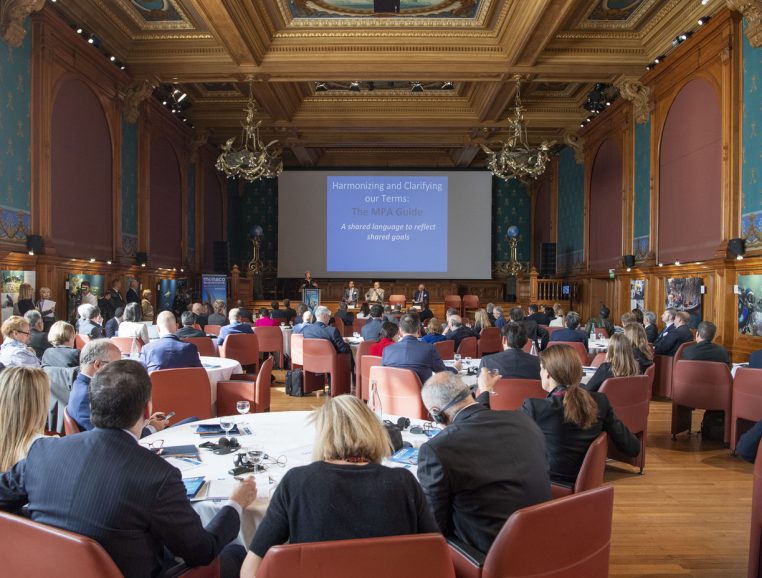
On the occasion of the 3rd International Year of Coral Reefs (IYOR2018), the Oceanographic Institute of Monaco co-organised a symposium at the Maison des Océans in Paris. The workshop focused on the latest knowledge and research on these environments and on solutions to try to halt their decline.
This symposium, which took place on 20 June 2018, was organised by the Foundation for Research on Biodiversity (FRB), the Oceanographic Institute of Monaco, CRIOBE, the Platform Ocean and Climate (POC) and the French Initiative for Coral Reefs (IFRECOR).
Status report, pressures and threats
Its preliminary objective was to take stock of the services provided by corals and their ecosystems, their state of health and the threats they face. It then continued with two round tables bringing together scientists, managers and civil society actors around two major themes. On the one hand, how to mobilize and adapt governance to implement new tools for better protection of spaces and species. On the other hand, to exchange on the latest scientific knowledge concerning the functioning of coral reefs and innovative management solutions to develop them on a larger scale.
Everybody’s business?
New tools are needed to better protect areas and species and to limit anthropic pressures. Effective reef protection cannot be achieved through a unilateral approach and should involve as many stakeholders and sectors as possible in protection and governance choices. What perceptions do local communities have of the services provided by coral reefs? The place they occupy in their daily lives? On this basis, how can they be mobilized and involved more widely in decision-making? What financial tools should be developed to guarantee the viability and sustainability of conservation and protection policies?
Organising the fight
The pressures and threats to coral reefs are such that their continued existence on the planet is at stake. Nevertheless, there is still time to act. Scientific advances have revealed hitherto unknown adaptation mechanisms in certain coral strains, and various stakeholders are seizing on these results and mobilizing to ensure the sustainability of reefs.
We can all take greater awareness of what we buy, where we buy it, where it comes from, how it is made and how it is packaged. It is not strictly about buying less, more about buying better: seasonal, local products, packaged appropriately for the quantity and using recycled materials. Sometimes you will be able to save money but above all you will be taking care of your health and the health of the planet, whilst reducing waste and improving your ecological footprint. Use your purchasing power to make sure your money goes towards making a change for the better!
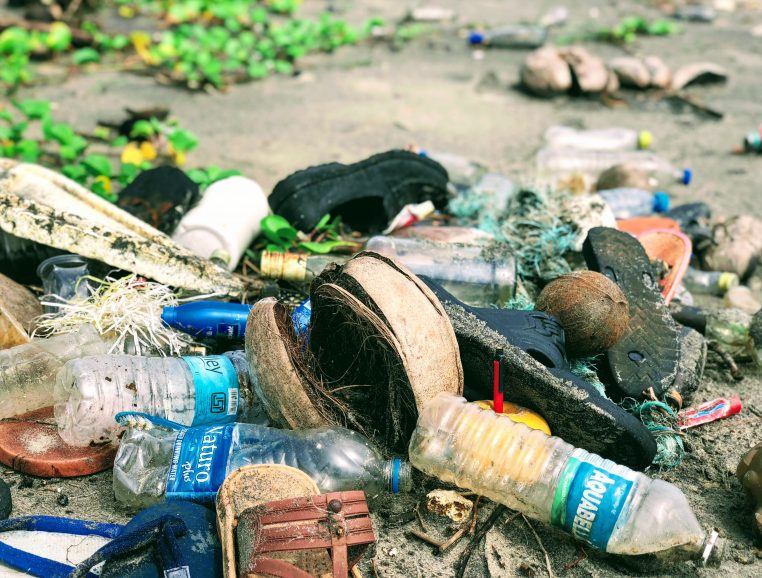
THE PLASTIC PLAGUE
1
MILLION TONS OF PLASTIC WASTE IN THE OCEAN BY 2030.
1%
OF ALL PLASTIC PRODUCED IS WASTE WHEN IT COULD BE RECYCLED.
1/3
OF PLASTIC WASTE IS NOT RECYCLED, I.E. 100 MILLION TONNES ARE POLLUTING NATURE EVERY YEAR.
1
MILLION PLASTICS LAND IN THE MEDITERRANEAN SEA EVERY YEAR, THE EQUIVALENT OF 33,800 PLASTIC BOTTLES PER MINUTE.
SOURCE: WWF
REFUSE SINGLE-USE PLASTICS AND EXCESS PACKAGING
Start with the plastic bags that you always get when you go shopping; use the guide on banning plastic bags issued by the Princely Government. You can also help the planet by favouring solutions that no longer use plastic, such as cardboard or reusable straws, by buying your food in bulk, by using homemade household cleaning products, etc. You can also choose to buy products that do not come with excess packaging or are not packaged in plastic.
RECYCLE AND SORT YOUR WASTE CAREFULLY
The environmental value of sorting waste is currently very significant. You can reduce waste by following the sorting guide issued by the Princely Government. Recycling is particularly virtuous: disposing of your waste in a closed circuit prevents it being dumped into the natural environment and reuses the materials to produce new products, which prevents us having to dip into natural resources.
PREFER SHORT DISTRIBUTION CIRCUITS
The principle of short circuits is based on a regular supply of seasonal products. There are many alternatives for eating organic and local food and allowing producers such as fishermen and farmers to benefit from a fairer economic model. We can mention local online markets, farmers’ grocery stores, products in relay points, farmers’ markets which are part of the short circuits. By eating organic and local food you can enjoy healthy seasonal products, with high nutritional qualities, little packaging and a low energy balance. So what are you waiting for?
SUPPORT THE “PARTY WITHOUT BALLOONS” INITIATIVE FROM THE INSTITUT
Balloons evoke festivity, joy and conviviality, but when released into the air, they very often end up in the ocean and thus become a threat to many species: sea turtles, dolphins and birds mistake them for food, ingest them and often die from them.
Initiatives exist, but others can still be invented to celebrate a moment of happiness in the long term. The Oceanographic Institute and its partners invite you to an idea contest: together, let’s invent a party that also pleases the sea turtles. Submit your ideas via our Facebook group.
A wide range of wildlife products are on sale around the world. If you are fortunate enough to travel, you can support the protection of biodiversity by refusing any products (food, souvenirs, etc.) stemming from the trade in wild species – if they are made from protected animals or plants, trade in them could be illegal.
If you live in Monaco, there are other solutions available to you
Add your title text here
IDENTIFY COMMITTED TRADERS
In 2014, the Government initiated the “Committed Trade” initiative with the Principality’s retailers with the aim of encouraging eco-responsible practices, with a particular focus on reducing waste and greenhouse gas emissions. Discover the new news of the Commerce Engagé network in the Principality!
SIGN THE NATIONAL PACT FOR ENERGY TRANSITION IN MONACO
Consisting of a commitment charter and sectoral action plans, the National Pact aims to reduce greenhouse gas emissions by 50% by 2030 and to achieve carbon neutrality by 2050. All the information is available on the government website with the possibility to join online (in French and English)!
Increasingly numerous in the world’s oceans, jellyfish, an animal that is both fragile and fearsome, could take over from fish and seriously threaten the already damaged marine balance. Robert Calcagno, Director General of the Oceanographic Institute, and Jacqueline Goy, Scientific Attaché at the Oceanographic Institute, decipher this disturbing phenomenon during a lecture given on 14 May 2014 at the Maison des océans in Paris. Nassera Zaïd reports on the event.
What do we really know about jellyfish?
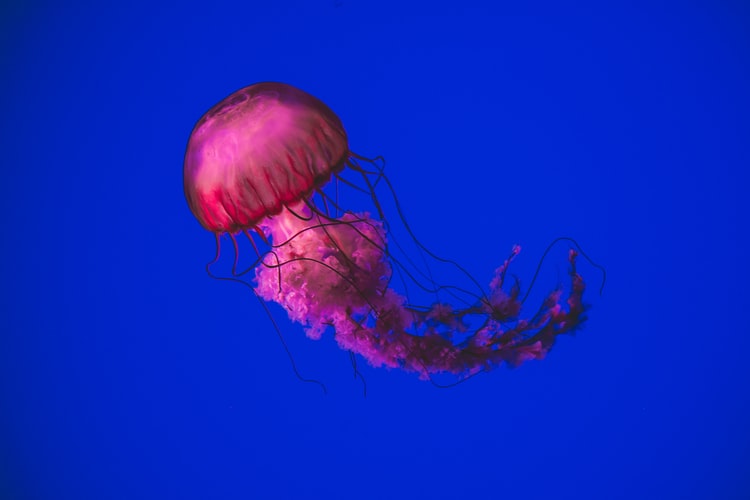
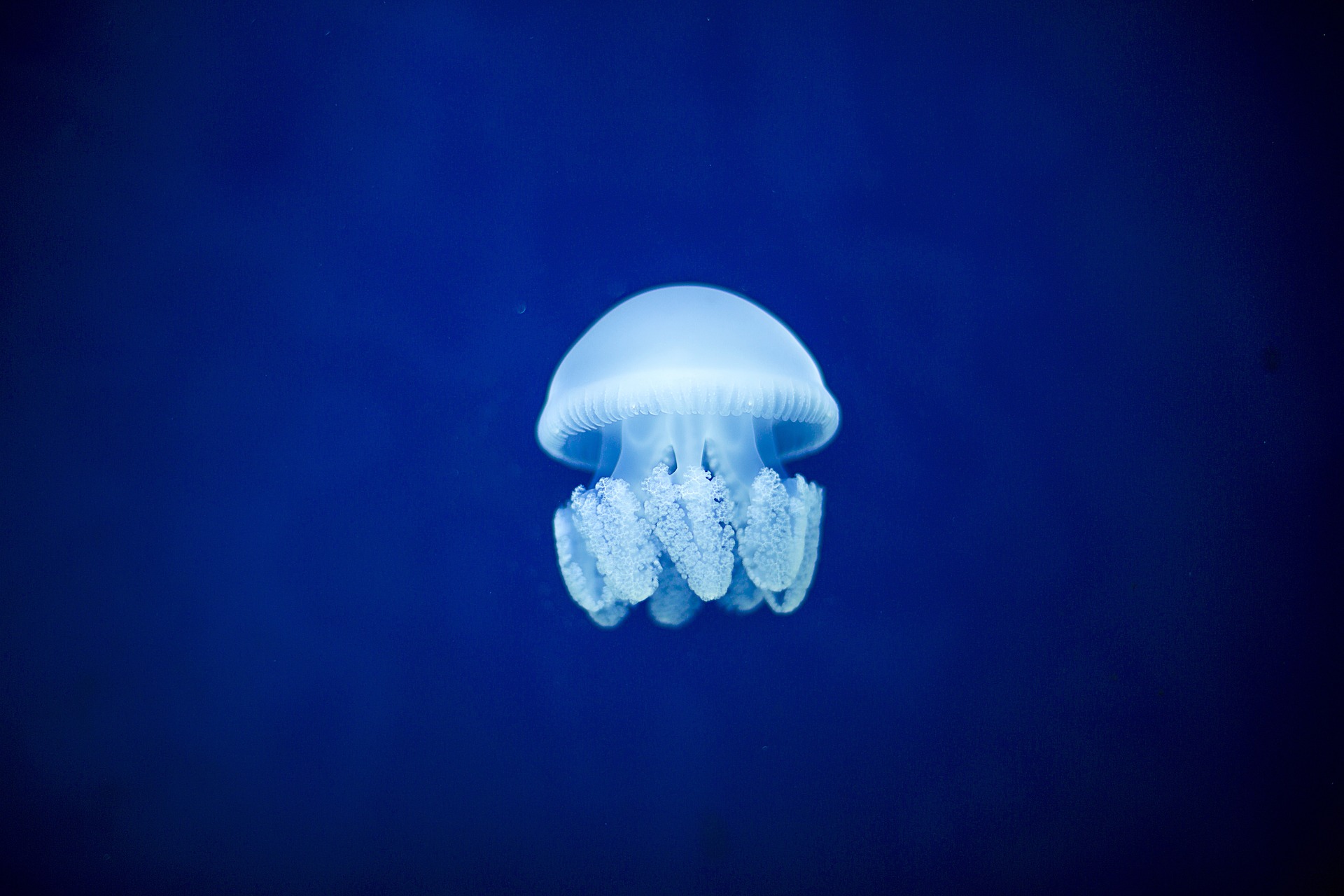
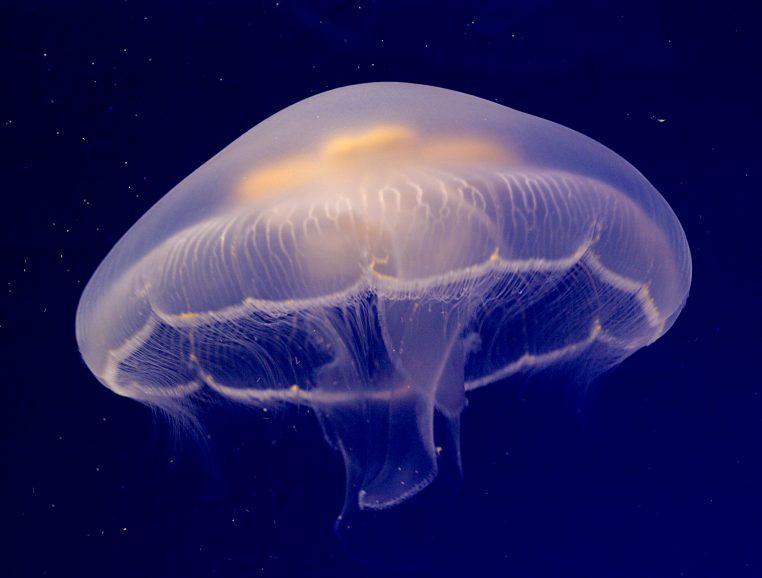
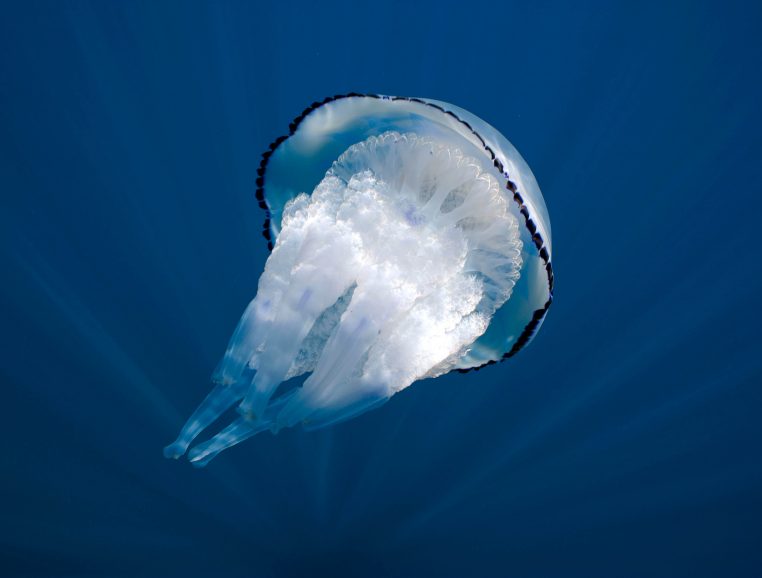
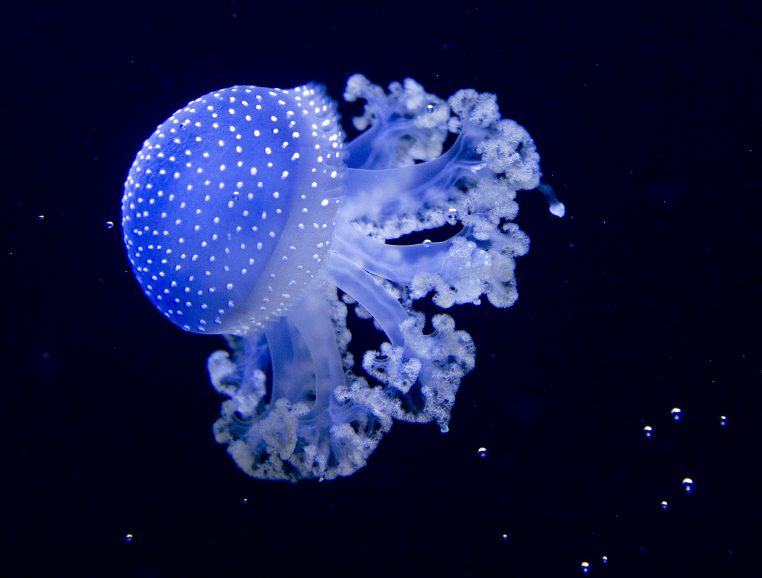
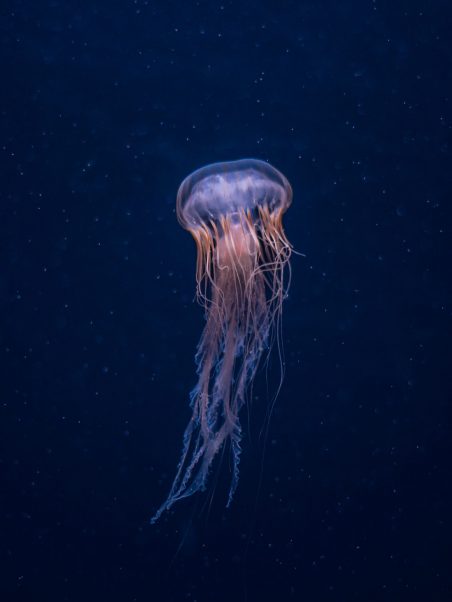
Often associated with the pain of their stings, jellyfish are “gelatinous organisms that have always fascinated the public and scientists,” introduces Robert Calcagno. Nearly 1,000 species have been identified, including the Pelagia noctiluca, which is very common in the Mediterranean.
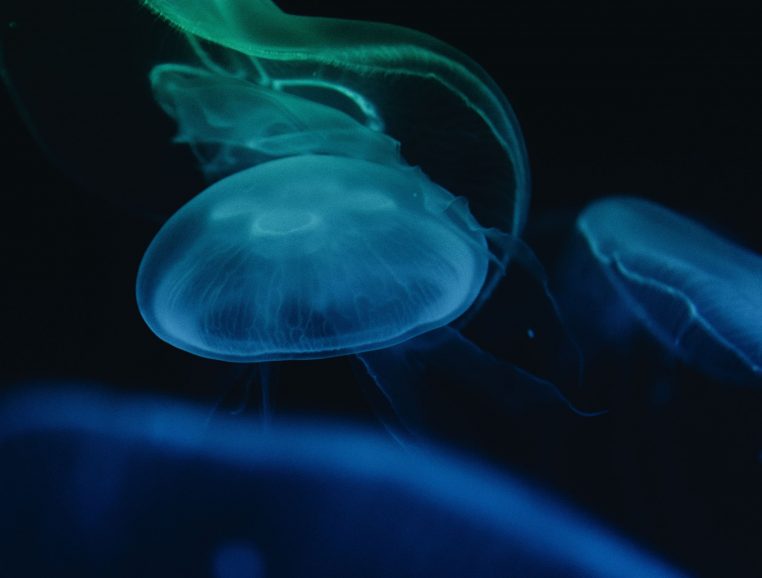
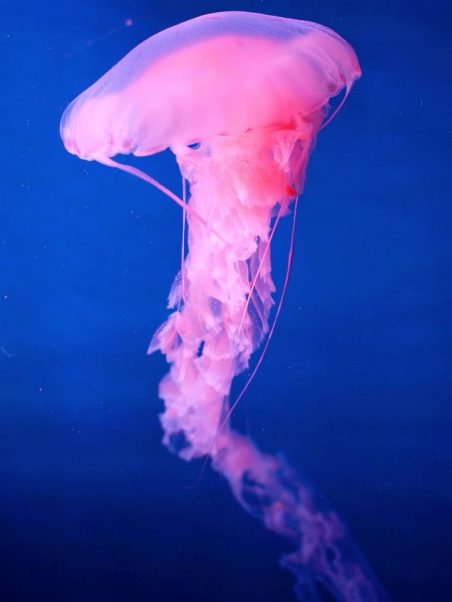
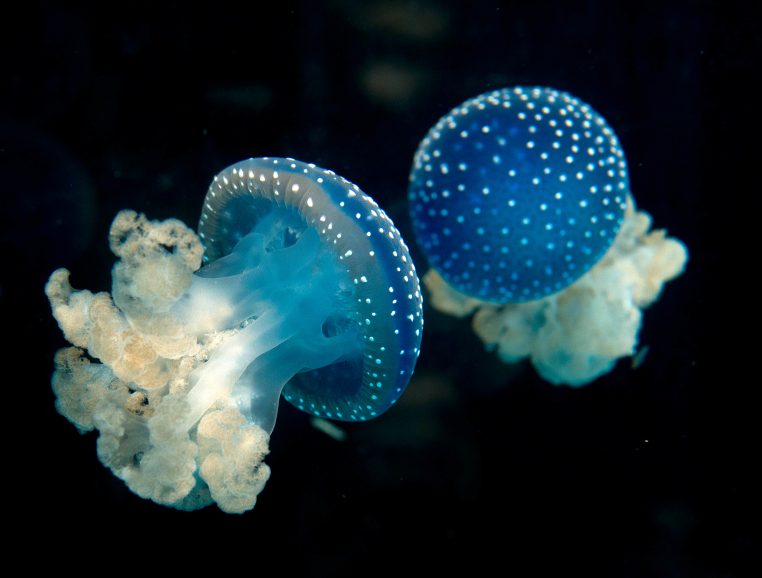
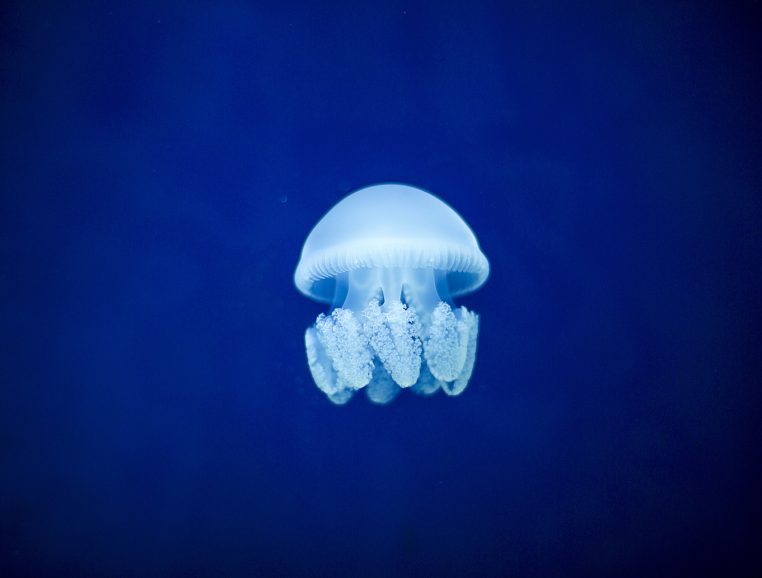
Jellyfish come in a variety of shapes and sizes ranging from a few millimetres to over two metres in diameter. 98% of their body is made up of water, formed by a bulging part (the umbrella), where the mouth and the reproductive organs (or gonads) are located, which can be observed through transparency.
All around, a series of tentacles with stinging cells are used to harpoon prey. Their sting is paralyzing, even deadly as for the jellyfish Chironex fleckeri which lives along the Australian coast.
Jellyfish, a predatory instinct?
“Jellyfish are constantly eating to reproduce,” explains Jacqueline Goy, who has been studying cnidarians for thirty years.
Fertilized in the water, each egg produces a larva, the planula, which will settle on the bottom and develop a polyp which will itself multiply by budding to give rise to a colony of jellyfish.
Hunting is a necessity, hence its predatory instinct. Despite this, “jellyfish are very fragile animals. It is an animal that is not protected. They don’t have a shell like mollusks, nor do they have a test like sea urchins. A particular morphology which makes one think of “a drop of water in the sea, moving with the currents”, describes the specialist.
However, this physical vulnerability does not rule out the danger feared by scientists: its mass reproduction.
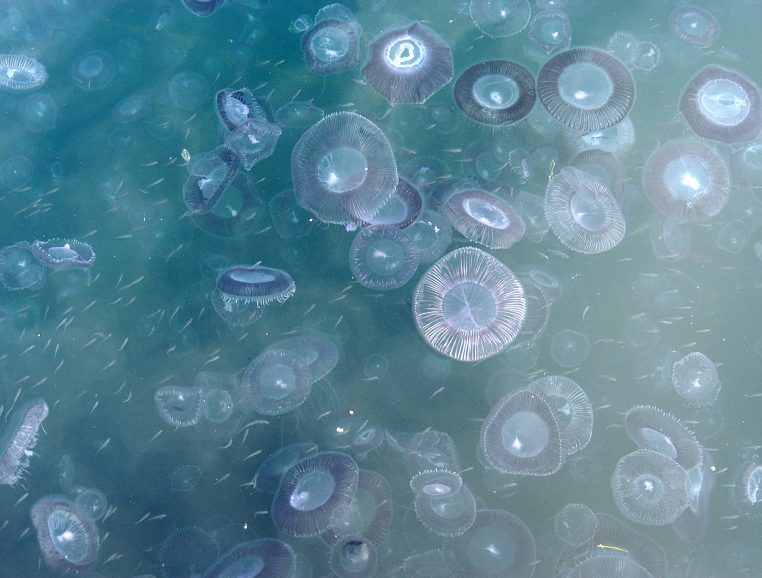
“Jellyfish are currently overtaking all other marine organisms and becoming dominant in the seas,” says Jacqueline Goy.
A growing proliferation which for several years has taken on the appearance of uncontrollable colonization.
Previously, there were pullulation cycles every twelve years,” explains Robert Calcagno. We even used to talk about ‘jellyfish years’. But since the 1980s, and especially since the 2000s, all years are jellyfish years. We could even say: there are no more years without jellyfish.
The main reason for this change is the impact of human activities on the oceans. First and foremost, overfishing. “By catching tons of fish (80 million are caught each year), trawlers eradicate a number of predators for jellyfish, such as tuna, turtles, sunfish … They also eliminate their competitors, small fish, anchovies or sardines that feed on the same zooplankton.”
“Jellyfish are currently overtaking all other marine organisms and becoming dominant in the seas,” says Jacqueline Goy.
A growing proliferation which for several years has taken on the appearance of uncontrollable colonization.
Previously, there were pullulation cycles every twelve years,” explains Robert Calcagno. We even used to talk about ‘jellyfish years’. But since the 1980s, and especially since the 2000s, all years are jellyfish years. We could even say: there are no more years without jellyfish.
The main reason for this change is the impact of human activities on the oceans. First and foremost, overfishing. “By catching tons of fish (80 million are caught each year), trawlers eradicate a number of predators for jellyfish, such as tuna, turtles, sunfish … They also eliminate their competitors, small fish, anchovies or sardines that feed on the same zooplankton.”
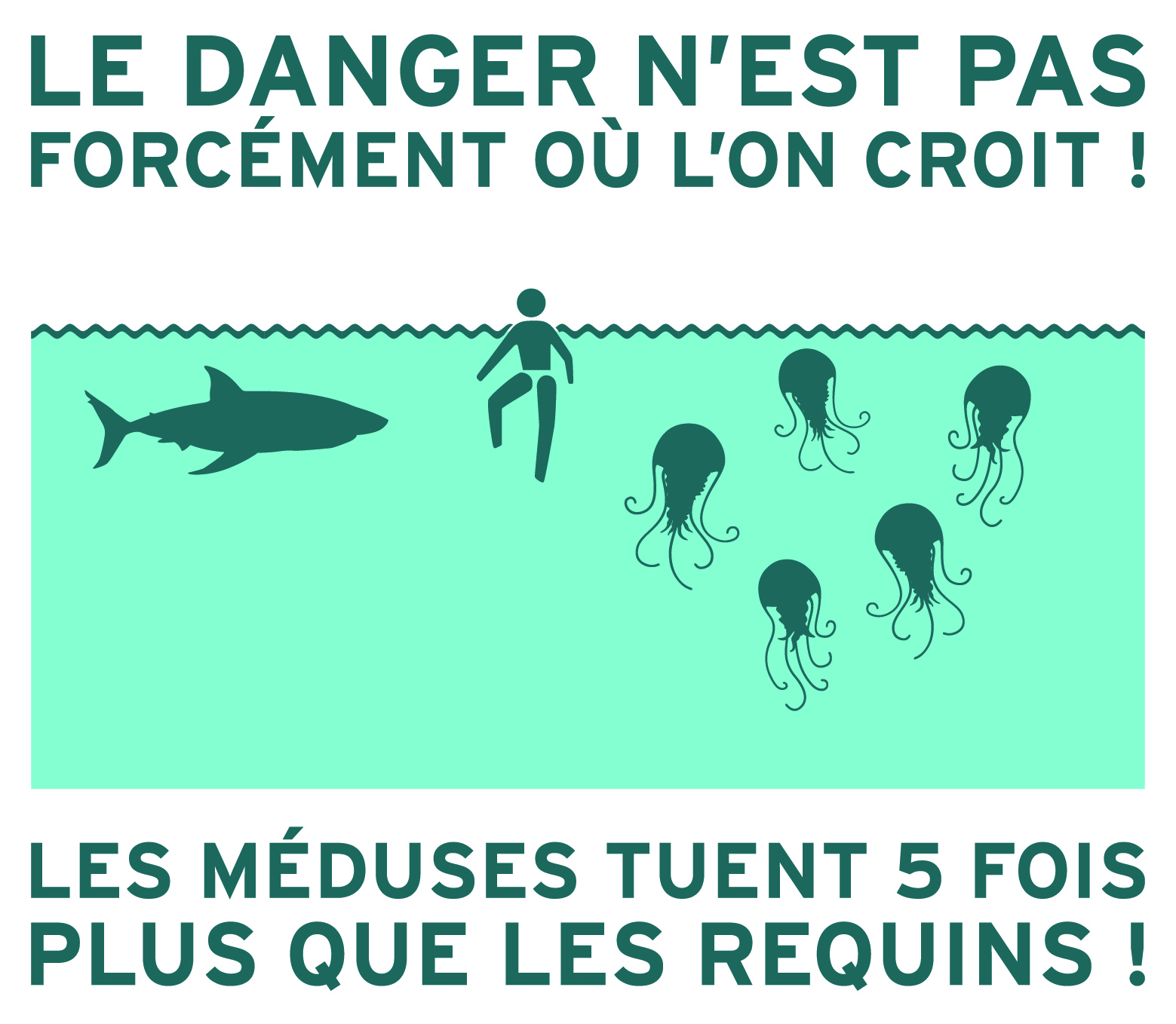
Jellyfish are ultimately formidable,” concludes Robert Calcagno. To understand this, you just have to look at the statistics and see that, each year, more than fifty people die as a result of jellyfish stings, compared to ten for shark attacks. But nobody talks about it that much.” And their impact is not limited to burns. Another victim of the jellyfish is the economy.
“The outbreaks have already put boats in trouble, as happened, says Robert Calcagno, to a Japanese trawler that capsized on a perfectly calm sea because of the weight of the jellyfish clusters caught in its net.
Aquaculture companies are also victims of these cnidarian clusters that come to feed on the fry and thus wipe out the farms. Namibia, once renowned for its quality fishing, has seen its fish stocks disappear due to overfishing for jellyfish. So what solutions are available to us?
Although statistics on jellyfish deaths are less well known than for sharks, jellyfish cause more human deaths. Caroline Pascal - Oceanographic Institute.
What can be done about the jellyfish invasion?
Several inventions have been created, even the most improbable ones, such as the “jellyfish destroying robot” which, once immersed in water, detects and crushes the animals with a propeller. “The remedy is however worse than the evil,” Jacqueline Goy is astonished, “since by cutting them in this way, the reproductive cells are released and multiply”.
Another solution that has been tested is a protective net for the beaches. However, its high cost makes it difficult to generalize on our coasts.
Prevention by modelling to alert the public of the advance of jellyfish, organised by the Oceanological Observatory of Villefranche-sur-Mer in the form of Météo-méduses, may just help to better protect oneself.
Last option: eat them. However, it should be noted that only a dozen species out of 1,000 are edible,” says Jacqueline Goy. The high water content of jellyfish does not make it a very nutritious food.
Once the jellyfish have settled in, it’s already too late,” says Robert Calcagno. We need to restore the balance of the oceans, like 50 years ago.” How? By controlling and promoting sustainable fishing, by developing clean maritime transport and purification stations, and by recycling the hot water rejected by nuclear power stations to heat greenhouses, for example.
Net to protect bathers from jellyfish on a Monegasque beach. Michel Dagnino - Oceanographic Institute
Proliferating today in our oceans because of human activities, jellyfish have survived through the ages. Known and described since Aristotle, they were mainly named in the 19th century by the naturalist François Péron. Jacqueline Goy retraces their history through history.
What is the connection between Aristotle, Pliny the Elder and jellyfish?
In antiquity, Aristotle was interested in them and among the hundred or so marine animals he described, he called them cnidae, which means “stinging”, specifying that they move here and there on the water. In homage to Aristotle, naturalists of the 20th century created the phylum of cnidarians to classify jellyfish, corals, sea anemones… which all sting. Four centuries later, Pliny the Elder observed the movements of jellyfish, which reminded him of the contractions and dilations of breathing, and he named them Pulmo marina, the marine lung.
Observing the large quantity of Rhizostome jellyfish washed ashore on the coasts of Poitou, French physician and naturalist Antoine de Réamur coined the term “sea jelly” in 1710.
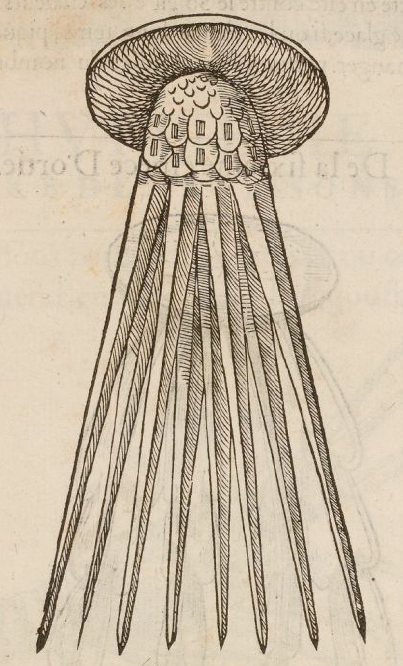
The fifth species of nettle
Cinquième espèce d'ortie, page 383 of L'Histoire entière des Poissons by Guillaume Rondelet, CTHS reprint, 2002.
In the Middle Ages, the marine bestiary was mainly populated by monsters, chimeras and mermaids, especially since this period was more interested in theology than in the study of nature.
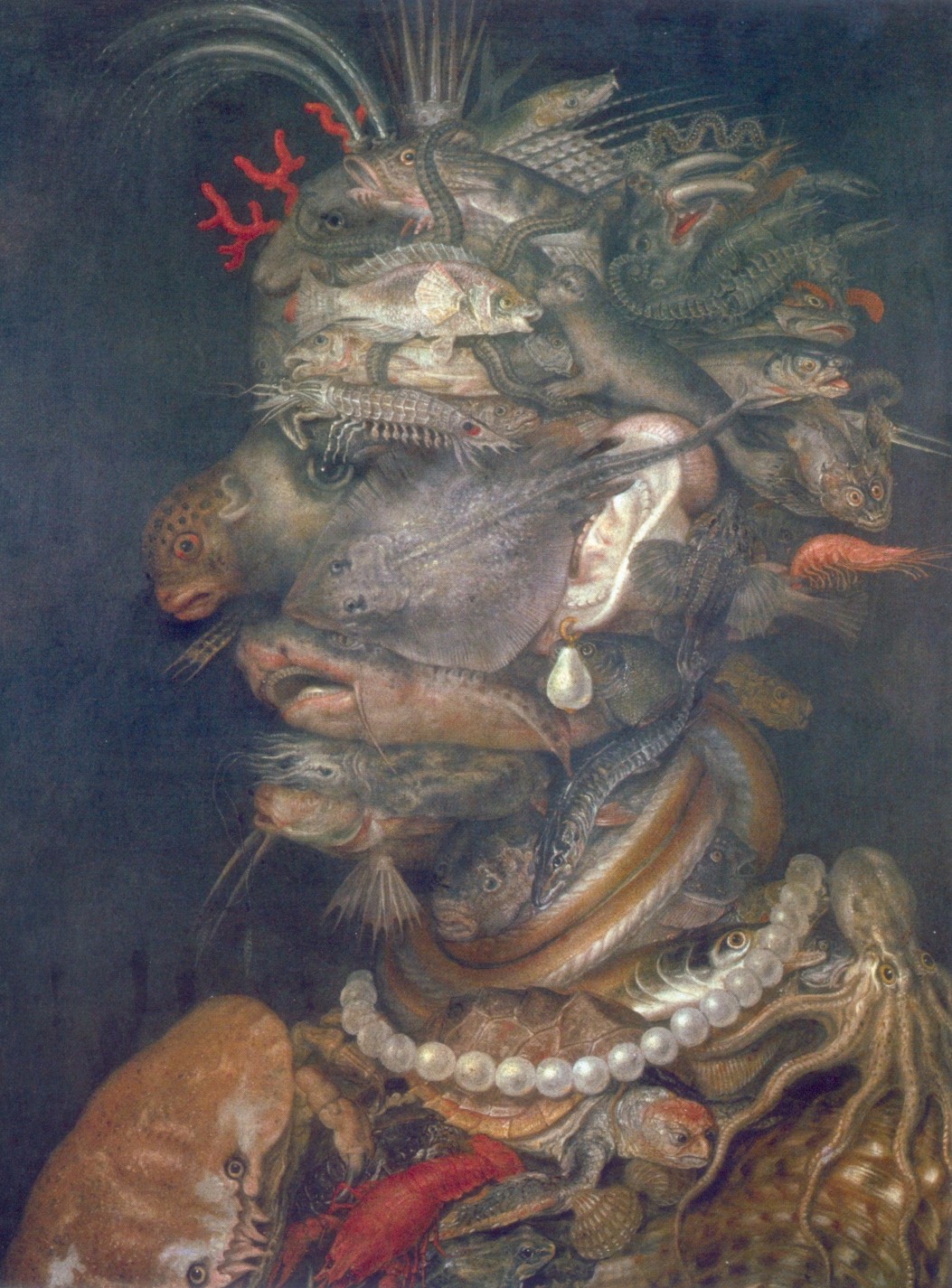
It was not until Guillaume Rondelet and his work Histoire entière des poissons published in 1554, in which he described a series of stinging animals called “sea nettles”. The fifth species is the jellyfish Rhizostoma pulmo, which has a fabulous fate, arranged in a crown, in the painting TheAllegory of Water by Giuseppe Arcimboldo in 1566.
The great turning point in the knowledge of zoology is obviously Carl Linnaeus. He proposed a classification of the living world, both plant and animal, in his Systema naturae, a seminal text, and in the fourth edition of 1744, he introduced the name medusa by comparison with the face of the Gorgon.
Giuseppe Arcimboldo's Allegory of Water, original in the Kunsthistorisches Museum in Vienna, oil on wood, 1566.
The Cassiopea jellyfish is dedicated to Cassiopeia, the mother of Andromeda in Greek mythology
in the 19th century, medusas acquire ancient names
Jean-Baptiste de Lamarck, who was a professor at the National Museum of Natural History when it was founded in 1793, assumed that life originated “in the gelatinous masses scattered in the great ocean”. And the gelatinous masses could well be the jellyfish.
This is why a young naturalist, François Péron, took up the subject to make a monumental study of it. According to Albert Soboul, a historian specializing in the French Revolution, revolutionary fashion introduced a majority of heroes from Antiquity into the first names and it also fell on the jellyfish!
Péron does not hesitate to give the names of gods and goddesses to his species. Thus, there are Cepheas, the Cassiopeaand Persaand Chrysaora, of the Geryonia and others, all dedicated to the characters that revolve around the myth of Medusa, names that are still in force.
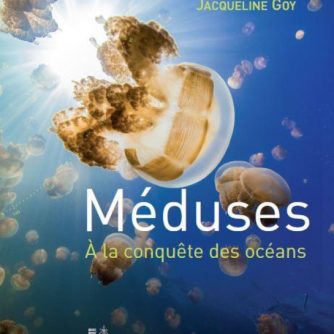
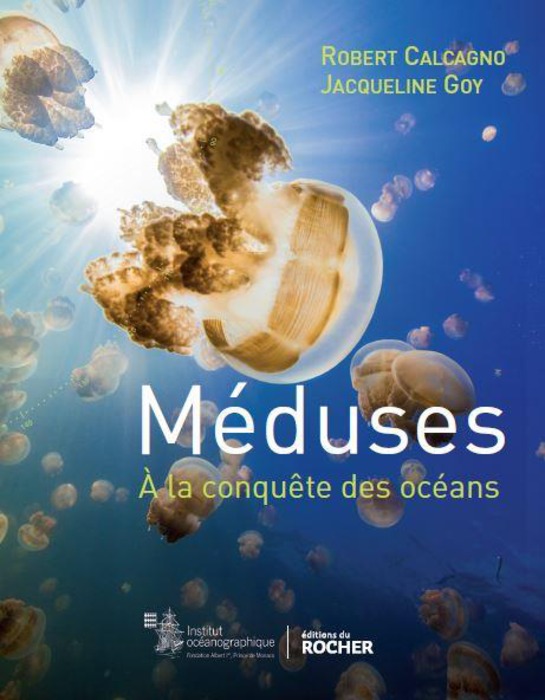
Jacqueline Goy, an oceanographer-biologist specializing in the study of jellyfish, and Robert Calcagno, director of the Oceanographic Institute of Monaco, co-authored the book “Jellyfish, conquering the oceans” published in 2014. Well-documented and extensively illustrated, this book helps us to learn more about these organisms, which are both feared and fascinating, and to understand how climate change is encouraging their expansion.
Knowledge of jellyfish has fortunately advanced recently, but my concern regarding the exhaustion of the oceans has too. It is a certainty that jellyfish appear to be the only species that prosper throughout the ocean and that benefit from all our excesses. [...] They are clearly showing us a road we do not want to take, but that we are drawn into following by our short-term appetites. Up until now we have associated the sea with freedom and just letting things happen. We have become as complacent with the oceans as we have with our environment in general.
What if the oceans were “gelling"?
Jellyfish are thriving. Graceful and fragile in appearance, they adapt to marine pollution, take advantage of the excesses of fishing and gradually conquer our seas. Is ocean gelling inevitable? How far will the jellyfish go?
Through the book-documentary “Jellyfish: conquering the oceans”, the Oceanographic Institute puts into perspective the degradation of ocean health and the outbreak of jellyfish. A reminder of the risks of reckless overexploitation of the marine environment.
Jellyfish, sentinels, alert us to the quality of the water. This book questions the relationship between man and the sea, the natural environment and the fragile balance that it is vital to preserve.
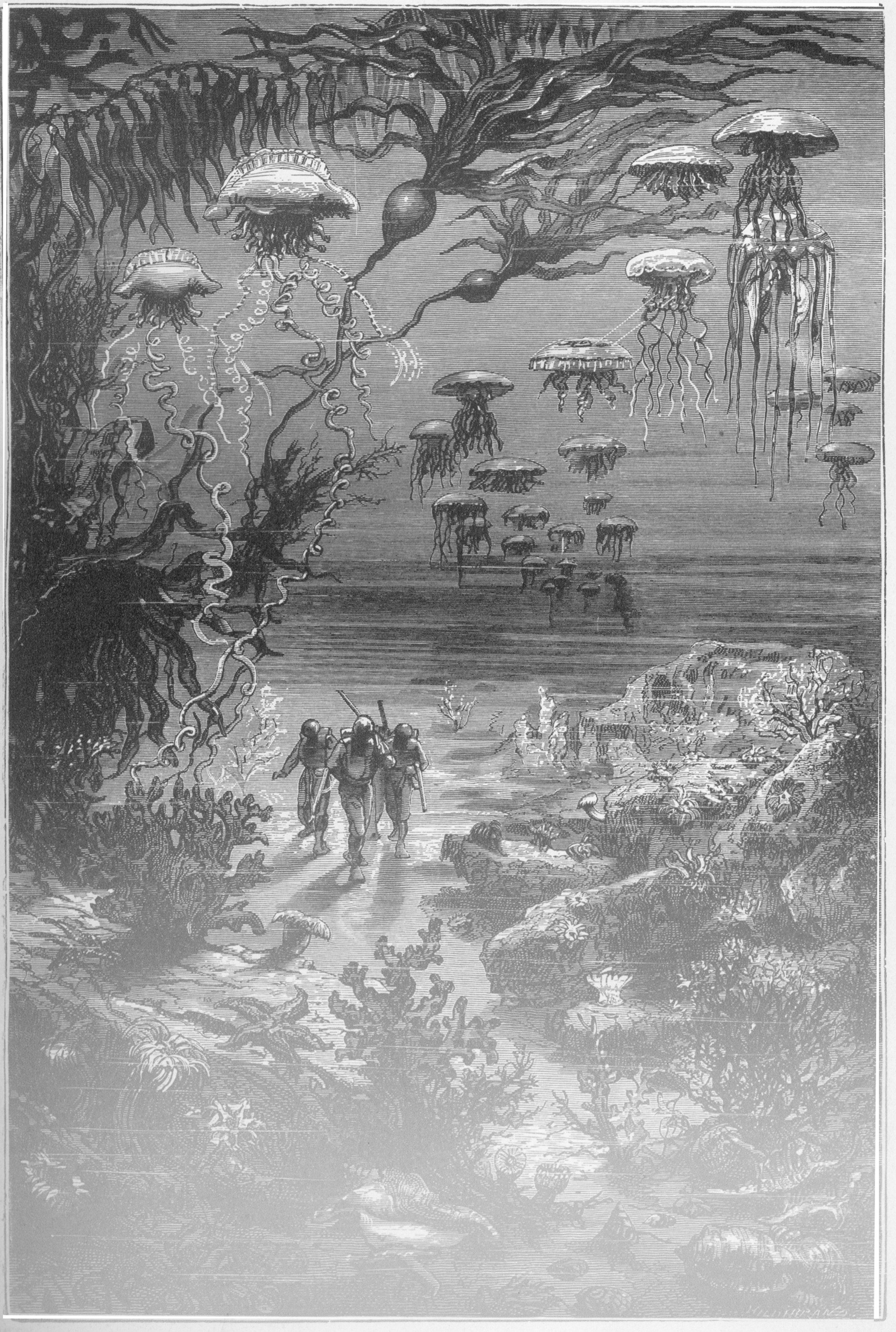
Jules Verne, Twenty Thousand Leagues Under the Sea, Illustrations by Neuville and Riou, Hetzel s.d. Private collection.
The apparent fragility of these organisms hides a formidable efficiency. Primitive in appearance, they let themselves be carried by the currents and in fact go to the essential: feeding and reproduction. However, their efficiency and robustness are exceptional.
Their life cycle is astonishing, between dormancy and massive reproduction, even rejuvenating when the need arises. Jellyfish hold the key to immortality. They also have an exceptional capacity to adapt. They have adapted to all oceans, including fresh water.
Today, they are resisting our excesses, when we pollute the oceans with our nitrates, our medicines or our plastic waste. After having taken advantage of the boom in maritime transport to conquer new spaces, they are only waiting for climate change to launch their next offensive.
Man and jellyfish: friends or enemies?
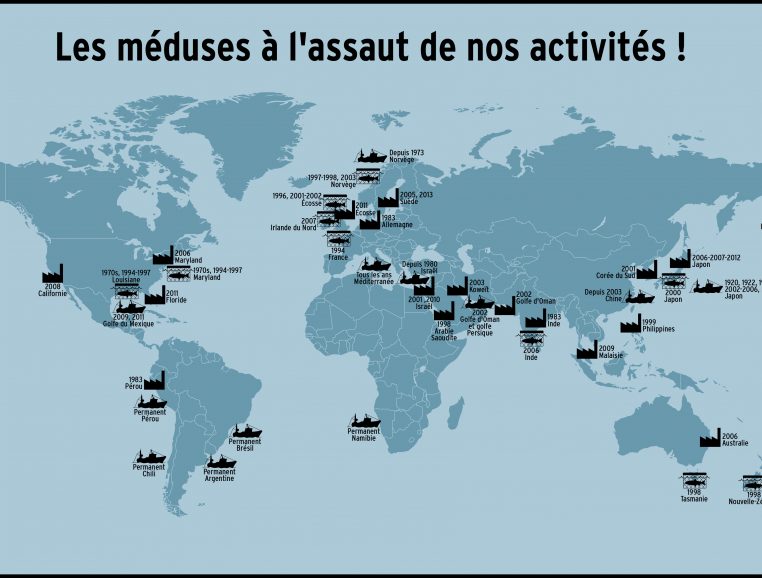
Jellyfish can cause even paralysis of our activities. On European beaches, jellyfish are the nightmare of holidaymakers. On the other side of the world, their bites can be deadly. And they also attack fishing, aquaculture and even nuclear power plants, which they choke!
However, man is the main ally of jellyfish: overfishing rids them of their predators and competitors; various types of pollution feed them or further strengthen their robustness. By offering them the oceans, they allow them to enjoy a new golden age.
Human activities impacted by the presence of jellyfish in the world in recent years, either permanently or accidentally. Caroline Pascal - Oceanographic Institute
Learning about jellyfish at the Oceanographic Institute
Despite their simplicity, jellyfish can also be of some service to us and have already won two Nobel prizes. Perhaps one day they will share the secret of immortality? Science is going after their secrets.
Jellyfish are thus at the heart of a comprehensive programme run by the Oceanographic Institute of Monaco. The aquariums of the Oceanographic Museum offer a real encounter with jellyfish (aurelias, cassiopaea…).
In addition, conferences and temporary exhibitions were organized in 2014 on the theme “The new lords of the oceans: sharks or jellyfish?” In addition, conferences and temporary exhibitions were organized in 2014 on the theme of “The new lords of the oceans: sharks or jellyfish?”, both at the Maison des océans in Paris and at the Oceanographic Museum in Monaco.
The book “Jellyfish: conquering the oceans” is a further development of this programme. It is published by Éditions du Rocher and is available for 19,90€.
A simple yet complex organism, the jellyfish is often feared by bathers but fascinates scientists. There are over 1,000 species of jellyfish, and little is known about most of them. Nonetheless, their capacity for survival, adaptation and reproduction seems unrivalled. Some are even believed to be ‘immortal’.
Jellyfish have reproductive superpowers
Jellyfish represent the first manifestation of sexuality as a mode of reproduction for multicellular animals. There are male and female jellyfish. The gonads are formed in close relationship with the gastro-vascular system. The male gonads produce sperm and the female gonads produce eggs. Most of the time, the reproductive cells are discharged directly into the sea where fertilization takes place. But in some species of jellyfish, fertilization is internal. Sperm released into the sea are ingested by the females and reach the eggs to fertilize them. The female then lays an egg. Pelagia noctiluca, for example, discharges large 0.3 mm eggs through its mouth, which are clearly visible to the naked eye. There are hermaphroditic organisms, possessing both sexes. This is the case of Chrysaora hysoscella, a very large jellyfish from the Atlantic coast. However, the male elements are always earlier than the females, which does not prevent self-fertilisation.
Do jellyfish travel the seas for their entire life?
Most jellyfish have two stages in their life cycle. The fixed stage is called hydrarium. The jellyfish is fixed on the ground, motionless. Some jellyfish have only one fixed stage; for others, this stage is cyclical. The free stage is called a jellyfish, which can be confused with the jellyfish as an animal.
The early stages of development are identical to hydromedus and scyphomedus, although they have a different life cycle. After fertilization, the egg evolves within a few hours into a ciliated larva called a planula.
The budding of hydromedusas and siphonophores
In hydromedusae, the planula falls to the bottom and settles there. It then transforms into a small polyp with stinging tentacles and a single central orifice, which is both mouth and anus. In hydromedusae and siphonores, such as the physalie, a budding phase then occurs. Once formed, the solitary polyp will immediately produce buds by asexual multiplication. These buds evolve into secondary colonies. This is the beginning of a process that generates a colony of polyps linked together by a canal or stolon. Some of the buds may break off and reproduce a new colony. Some species become invasive, such as the Clytia.
The ‘strobilation’ of scyphomedusas
In scyphomedus, such as Aurelia aurita, the planula also falls to the bottom and attaches itself there. It then becomes a polyp of a different shape, called a scyphistome, which can bud and form a small colony. Most of the time these forms are solitary. The food and the temperature favour the budding of jellyfish. Thus, transverse grooves appear on the upper part of the scyphistome, this is the strobilation. One can imagine the scyphostome as a pile of plates as often mentioned in the treaties of zoology. The first segment is released by violent contractions and so on. Called ephyrules, these small jellyfish thus released grow to become adult sexed jellyfish.
Are there immortal jellyfish?
In 1988, a German student discovered Turritopsis. Like most hydrozoans, Turritopsis goes through two life stages: the polyp stage and the medusa stage.
Adult jellyfish produce sperm and eggs. Once fertilized, the egg forms an egg, then a larva which, when it falls, will settle as a polyp. For Turritopsis, the process is a little different. Instead of dying, the jellyfish falls to the ground, where its body folds in on itself, as if in a fetal position. The umbrella reabsorbs the tentacles and degenerates into a gelatinous blob. After several days, it forms an outer shell, a cyst. Then, root-like stolons grow and elongate until they produce a polyp. The new polyp generates new jellyfish and the process starts again.
Turritopsis is thus nicknamed the immortal jellyfish. However, this process is not specific to it. Researchers have observed it in other species such as Scolionema and Craspedacusta. Finally, it should be noted that it has only been observed in the laboratory, when the conditions of the farm were deteriorating.
The metamorphosis of box jellyfish
Highly venomous, even deadly to humans, the cubomedus is found in tropical areas. For their reproduction, they are equipped with a spermatophore, a pocket where spermatozoids are grouped. These are deposited by the mouth of the male on a tentacle of the female. The female then collects the sperm with her mouth. Fertilization takes place in the female’s stomach pouches. After fertilization, as with other species, a planula is formed. The polyp from the planula has captive tentacles. These allow it to crawl along the bottom before settling. It then completely metamorphoses into a single jellyfish.
Dreaded since antiquity, jellyfish have only been studied by scientists since the 20th century. Today, we are discovering their capacity for adaptation and regeneration. This gelatinous animal is a gold mine for medical and biochemical research, which hopes to use their particularities to heal. But jellyfish are proliferating, perhaps to the point of changing biotopes, and seem to be taking advantage of declining fish stocks. Let’s take stock with Jacqueline Goy, author of this scientific fact sheet.
Are we right to fear jellyfish?
In ancient times, the nuisance caused by jellyfish prompted Aristotle to give them the name “cnid” (Greek for “stinging”) and, as a tribute, scientists created the group of cnidarians to designate all animals with this function.
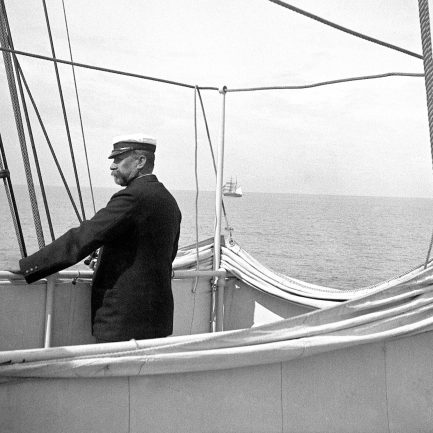
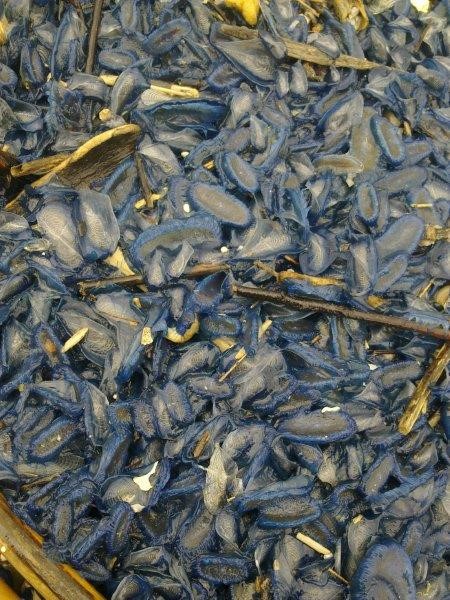
Jellyfish stings are not all of the same severity and, on our coasts, they can cause simple itching or deep ulceration. This is precisely what the sailors felt when sorting out trawl bags filled with physalies during the Prince Albert I of Monaco’s campaigns off the Azores. The physalies are not jellyfish but siphonophores whose long tentacles recover the preys by paralyzing them thanks to their toxins. Studied by two scientists, Charles Richet and Paul Portier, whom the Prince took on board, and tested on animals, the toxin had an effect on the heart and lungs, more violent on second contact. Both scholars called this reaction anaphylaxis, the opposite of phylaxis or protection. This is the height of allergies. Charles Richet was awarded the Nobel Prize in Medicine and Physiology in 1913.
Will we end up eating jellyfish instead of fish?
Overfishing leaves food available that is not consumed by fish, and jellyfish take advantage of this, which encourages their growth. The increase in water temperature can accelerate the reproduction of jellyfish, and the young are not likely to suffer from starvation in this favourable trophic environment. This general gelling of the oceans due to human activity is a dangerous deviation for the economy of the seas because jellyfish are not very valuable as food. Eating them – drinking them would be more accurate because of the 96% water content – does not constitute an energy meal.
Not so different from humans?
Jellyfish have eyes distributed along the edge of the umbrella: simple pigmented spots or with a cornea, a lens and a retina with a bipolar pigment layer. This is the first outline of cephalization, the study of which gives interesting perspectives for healing in cases of retinal degeneration. Another surprise after the mad cow disease which directed the research of collagen towards other animals than bovines, is the discovery of a collagen of human type in jellyfish. It is used as a fake skin for burn victims, as a culture medium in cytology and is an effective anti-wrinkle in cosmetology.
In English, the term jellyfish most often describes the whole of the gelatinous plankton which includes, in addition to jellyfish, other animals such as siphonophores (physalies…), thaliaceans (salps, pyrosomes…) and ctenophores (sea gooseberries, beroes…). As far as jellyfish are concerned, there are four main groups according to their life cycle.
Their size varies from a few millimetres to two metres in diameter, their tentacles can be non-existent or numerous and measure several tens of metres.
Their shapes are varied: round, square, flat, domed, massive… Their edges can be smooth or lobed.
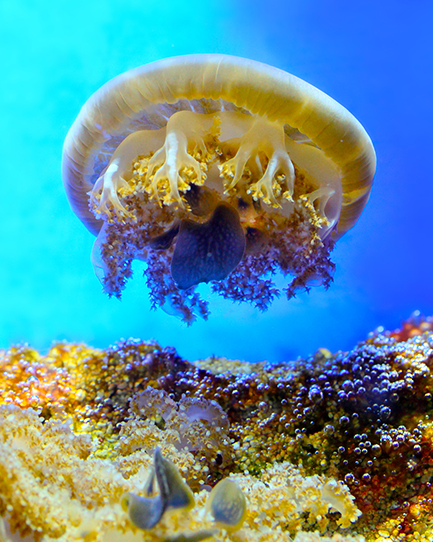
Depending on the species, the oral arms may be smooth, scalloped or cauliflower-like.
Scyphomedus has generally a free life stage and a fixed life stage. There are 190 known species, including Pelagia noctiluca and Aurelia aurita.
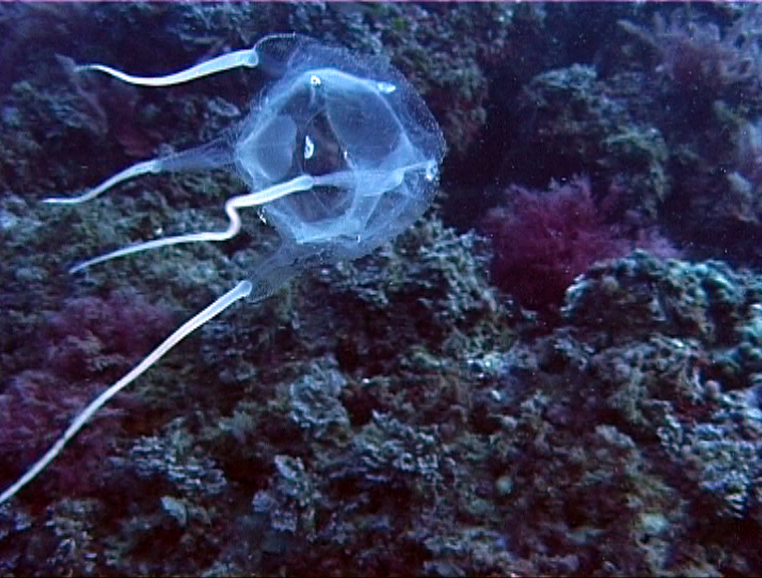
With their cubic umbrella, they are the most dangerous of all.
Of the 40 or so species, only 10% have a known life cycle.
Among the cubomedus, the famous Chironex fleckeri, known as the “sea sting”, “sea wasp” or “hand of death”, lives in the waters of the North Australian and South-East Asian coasts.
The species Carybdea marsupialis is sometimes found in summer in the warm temperate waters of the North Atlantic Ocean and the Mediterranean.
The fourth very special group consists of about twenty species that live attached to the ground or to a wall, and do not have a free stage.
A rare stauromedusa, Lipkea ruspoliana, was identified in 1998, in the aquariums of the Oceanographic Museum of Monaco. It had never been found in the Mediterranean since it was first described in 1886 by Carl Vogt, from a specimen fished off the northwest coast of Sardinia. The Japanese specialist Tohru Uchida considers it to be the ancestral form of all Cnidarians!
In terms of evolution, Lipkea is to jellyfish what the coelacanth fish is to vertebrates.
2013, the Sharks program of the Oceanographic Institute
Awareness-raising operations, dedicated exhibitions at the Oceanographic Museum, events for all, international scientific meetings: shark conservation is a major issue for the Oceanographic Institute. Through its major action programme “Sharks”, initiated in 2013, the Institute invites you to meet these lords of the seas, as fascinating as they are unknown, and advocates for a balanced management of the cohabitation issue that we face…
Sharks, which are essential for balance in the oceans, are under threat
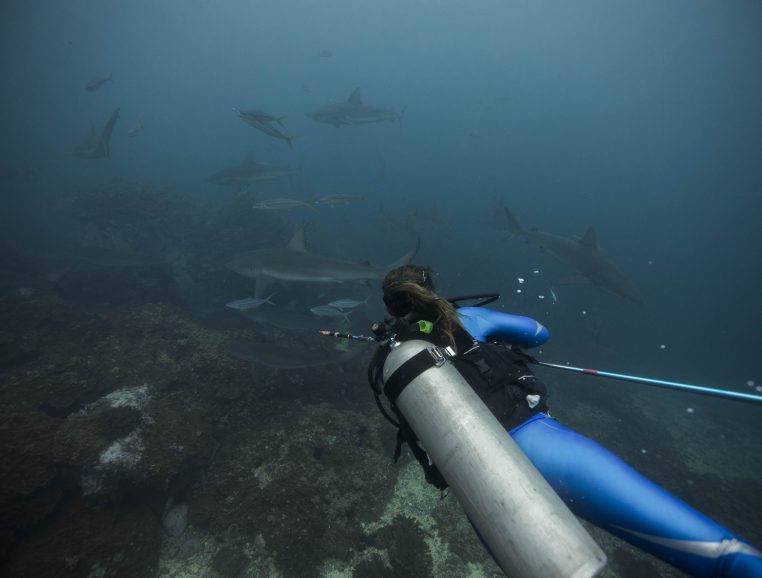
Sharks are the keystone of marine ecosystems, ensuring their balance and vitality. If sharks were to become extinct or scarce, ecosystems would be disrupted, with a cascade of threats to many other species. After 400 million years of dominating the oceans, shark populations have declined by 80-99% in the last 50 years. To avoid this catastrophe, the Oceanographic Institute is seeking to promote peaceful cohabitation between humans and sharks, even in the rare cases where sharks pose a risk to humans.
Discussion workshops for protecting sharks
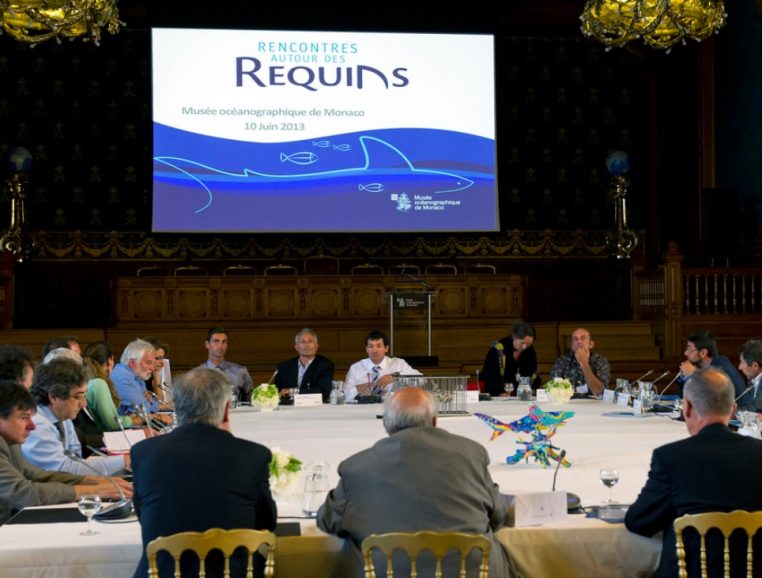
Together with its partners, the Oceanographic Institute regularly organizes high-level workshops. This was the case, for example, in 2013 during the two exchanges between international experts on the cohabitation between humans and sharks. These exchanges allow us to progress in the knowledge and protection of sharks and human activities, especially when there is a risk of accident: these meetings have led to the creation of a single document to date: the “shark risk toolbox”.
What is the “Monaco Blue Initiative”?
Launched in 2010 by H.S.H. Prince Albert II of Monaco, the Monaco Blue Initiative is a discussion platform co-organised by the Oceanographic Institute – Albert I, Prince of Monaco Foundation and the Prince Albert II of Monaco Foundation. It brings its members together once a year to address current and future global challenges in ocean management and conservation. This event provides a stimulating environment to encourage exchanges between companies, scientists and decision-makers, to analyse and promote possible synergies between the protection of the marine environment and socio-economic development.
Symbol of a wild and rebellious nature, the shark represents the limit of our domination of the seas, a frontier that some people are determined to push back to the abyss. In this 2013 op-ed, Robert Calcagno questions the relationship between humans and sharks.
In our Western culture, sharks have always been given the most detestable labels. They have the unenviable status of scapegoats and have been blamed for all the difficulties encountered by man in his conquest of the marine environment. Legend has it that they devoured shipwrecked sailors when the first boats headed out to sea, ate airplane pilots when the first paddleboats were found at sea, and were even disloyal competitors of fishermen when the catch proved insufficient.
No accusation was spared them, not even that of manhunters. Since the film “Jaws” (1975), it seems to be accepted that sharks have been stalking swimmers, surfers and windsurfers right up to the edge of the beach. When an accident occurs, it doesn’t take much for the man, in an outpouring of hatred, to demand justice.
What marine animal today can claim to match the media coverage of the shark or enjoy such a loathsome reputation? At no time, however, does the man question himself. He never establishes a correlation between the increase in the number of attacks and the boom in boating activities, which considerably increases the probability of an encounter between man and beast. For of the two, which is the one who invades the other’s territory?
The danger is elsewhere
Symbol of a rebellious nature, the shark represents the limit of our domination of the seas, a frontier that some people are determined to push back to the abyss. While the oceans are today appreciated as one of the last spaces of freedom, claimed by water sports and underwater enthusiasts, man seeks to introduce control and mastery. What sense would there be in a freedom that is exercised in a polite and sanitized world?
To focus on the domination of nature in this way is to ignore the origin of the danger, for it comes much more from within those lands that we think we control. While sharks kill less than a dozen people a year worldwide, collapsing sand tunnels in the United States alone cause that many deaths. In France, nearly 500 people die every summer from accidental drowning, including more than 50 in swimming pools. Not to mention the incomparably higher risk of accidents on the beach road! How would the total eradication of sharks have a positive effect on these statistics?
Since their appearance nearly 400 million years ago, sharks have escaped all extinction crises, surviving, for example, the dinosaurs. Today, however, man is making a rare effort to make them disappear. Specifically fished, most often for their fins, or caught in the great trap of global overfishing, more than 50 million of them disappear each year. Most known shark stocks have declined by 80-99% since industrial fishing began in the mid-20th century. With no qualms about it, or even with the satisfaction of getting rid of competitors or annoyances, man is reducing the oceans to vast pools.
Accepting a wild sea
Some island cultures could have enlightened us. Nurturing a completely different relationship with the sea, they respect sharks as the embodiment of a nature that gives and receives, that feeds and kills, without any malice and sometimes even with foresight, weighing souls to select victims and miracles.
The West, for its part, preferred to break the harmony and opt for confrontation. We are not aware that sharks play a key role in maintaining the balance and vitality of marine ecosystems by controlling the lower levels of the food pyramid and selecting weakened prey. Locally, the disappearance of sharks has already led to significant upheavals: an increase in the number of rays, which have wiped out the century-old scallop beds on the northeast coast of the United States, and the development of octopuses, which have feasted on New Zealand lobsters. On a large scale, the intensive traffic in these animals is leading us headlong into the unknown. We are certainly moving towards absolute domination, but domination over impoverished and barren oceans.
Our indiscriminate fight against the sharks is a testament to the poor life lessons learned so far. By wishing to push back the limits of the natural environment and the last great wild animals, we refuse any cohabitation which would not be based on domination. Accepting nature means accepting that some spaces escape our rules and requirements. Beyond questioning ourselves about the oceans, let’s question ourselves about the people we want to be…
Is it not urgent to show altruism by demonstrating that our freedom can also stop in front of that of other species which, good or bad, useful or useless, have for first characteristic to share our blue planet? It is at the price of this change of philosophical posture that humanity will be able to find balance and serenity.
Every day, our oceans absorb a quarter of the carbon dioxide produced by humans. The result? Ocean acidification is not without consequences for certain species of marine plants and animals, as Jean-Pierre Gattuso and Lina Hansson explain.
What is ocean acidification?
Most people have heard of climate change and global warming, due to the greenhouse effect.
We also know that human activity, particularly the carbon dioxide (CO2) released by cars and industry, for example, that is the cause of it. But the acidification of the oceans remains a little-known phenomenon.
This is hardly surprising, as the extent and consequences of the problem have only come to light in the past few years. However, CO2 is once again the cause. The acidification of the oceans is indeed sometimes called “the other CO2 problem”.
Impact on marine organisms
Not all the CO2 we produce remains in the atmosphere. Around one quarter of all CO2 emitted is absorbed by the oceans. When it dissolves in water, it causes an increase in protons (H+ ions) and a reduction in certain molecules, carbonate ions (CO32-), which many marine organisms need in order to build their skeleton or shell (coral, mussels, oysters, etc.).
These plants and animals are therefore finding it increasing difficult to develop these calcium carbonate structures. Their skeletons and shells are also at risk of dissolving. When the sea exceeds a certain acidity level, seawater becomes corrosive on calcium carbonate, the material from which skeletons and shells are made.
What can we do to limit ocean acidification?
Stopping ocean acidification completely is impossible; it will continue, whatever happens. Models show that the chemistry of seawater will remain altered for hundreds of years, but we can all do something to limit the phenomenon and thus limit its impact.
More or less realistic and desirable geo-engineering techniques have been proposed for limiting acidification (such as adding basic compounds to the oceans to counter acidification and raise the pH). However, the only solution that is proven to be effective and harmless is to address the cause, which is CO2.
The acidification of the oceans and the Principality of Monaco
The Principality of Monaco has been particularly active in the field of acidification since the strong commitment of Prince Albert II who initiated the “Monaco Declaration”, signed in 2008 by 155 scientists from 26 countries.
The Prince Albert II of Monaco Foundation has supported several research projects on ocean acidification. It also supports outreach activities to youth, the general public and policy makers.
The Monaco Scientific Centre has been conducting cutting-edge research on the impact of ocean acidification on tropical corals for 20 years. Since 2010, in collaboration with the International Atomic Energy Agency, it organizes every two years a workshop on the economic impacts of ocean acidification… The International Atomic Energy Agency’s marine laboratory conducts research on the impact of ocean acidification on commercial species. In 2012, it launched a International Co-ordination Centre on Ocean Acidification .
Under two percent of the ocean is currently “strongly protected”. In 2006, to make up for this shortfall, the Pew Charitable Trusts and several other partners launched the Global Ocean Legacy project. The aim of this project is to contribute to creating large-scale marine reserves, as set out in the scientific sheet drawn up by Global Legacy – Pew below.
The ocean, which is essential for life, is under greater and greater threat
The ocean plays an essential role in maintaining life on our planet. It covers almost three quarters of the globe and hosts around a quarter of all identified species in the world, not to mention plenty others we have yet to discover. The ocean ensures the survival of billions of people and a multitude of species of wildlife.
Human activity, however, is posing an ever-increasingly serious threat to its health. In this context, large and strongly protected marine reserves are becoming crucial with regard to protecting the marine environment. Within these reserves, fishing and all other extraction activities are prohibited to ensure that the oceans are properly preserved.
An association of world leaders sharing the same vision
Global Ocean Legacy collaborates with communities, governments and scientists from around the world to save some of the most important and well-preserved ocean environments. Global Ocean Legacy is a partnership of philanthropic leaders who share a common vision: protecting the ocean for future generations by creating 15 large marine parks – all of which cover at least 200,000 square kilometres – by 2022. The partners of Global Ocean Legacy are Bloomberg Philanthropies, Lyda Hill Foundation, Oak Foundation, The Pew Charitable Trusts, Robertson Foundation et Tiffany & Co Foundation.
Large and strongly protected marine areas, essential for conservation
Studies have shown that large and strongly protected marine reserves are crucial in terms of restoring the abundance and diversity of species and protecting the general condition of the marine environment. However, under 2.5% of the ocean is strongly protected, as against 1.5% of dry land.
In the US, the creation of Yellowstone National Park in 1872 was not just about protecting one of the most spectacular landscapes in the country; it also marked the beginning of a new way of thinking about protecting nature.
Satellite surveillance to ensure the boundaries of the reserves are respected
It can be difficult to monitor marine reserves and ensure they are respected in the remotest areas of the world, even though most of the last virtually untouched parts of the ocean are found there.
To overcome this difficulty, Pew joined forces with Satellite Applications Catapult, a British government initiative, to launch the Eyes on the Sea project and its virtual surveillance centre. This innovative system allows government agents and other analysts to identify and monitor illegal activities at sea, particularly illegal, undeclared and unregulated fishing, also known as pirate fishing.
Strongly protected large marine areas are essential for the protection of zones of the ocean against destructive human activities. They also contribute towards preserving species, habitats and the functional diversity of ecosystems. Unfortunately, there are still far too few of them. This scientific sheet from Global Ocean Legacy – Pew examines the issue.
The stresses suffered by marine ecosystems
The intensification of man’s impact on the ocean is resulting in the disappearance of the essential advantages offered by this ecosystem. Currents bring millions of tonnes of plastic and other waste from the coast to the open sea, where this waste harms marine life and changes how the ecosystems operate.
The increase in levels of carbon dioxide in the atmosphere has several consequences, including a rise in temperature and the ever-increasingly pronounced acidification of the ocean, which exacerbates further the stresses suffered by marine ecosystems. Fishing is also suffering from this situation.
PMAs are essential for the health of the ocean
Large, highly protected marine reserves are an essential tool for addressing several issues that affect the health of the ocean. These reserves protect zones of the ocean against human activities, such as industrial fishing, the extraction of natural resources and any other destructive use.
They also help preserve species, habitats and the functional diversity of ecosystems. Yet to date, only about 2% of the world’s oceans have been designated as highly protected marine reserves. Prominent scientists highly recommend that at least 30% of the oceans be given this degree of protection.
Five essential characteristics for successful conservation
A 2014 study showed that human activity has a combined impact on ocean ecosystems and that marine reserves offer better advantages with regard to conservation when they are vast, strongly protected, isolated, perfectly respected and old.
The advantages are considerably greater when all five of these characteristics are met. For example, protected marine areas that have all these characteristics have 14 times as much shark biomass, twice as many large fish and 5 times more fish biomass in general than unprotected areas. In comparison, protected marine areas showing only one or two of these characteristics are not substantially different from exploited areas.
Economic benefits for the population
Marine reserves also benefit communities by supporting the local economy. Marine reserves promote the health and life of the ocean, attracting tourists and boosting local economies.
They also create more resilient coastlines by strengthening reefs. In addition, they preserve cultural heritage. For example, on Easter Island, in French Polynesia or in Palau, conservation is a cornerstone of the history and daily life of the community.