





The institute's files
Written by experts...
- Home
- All the Institute’s Fact Sheets on Humans and the Ocean
CONSULT AND DOWNLOAD ALL OUR FILES FREELY
True to its missions, the Oceanographic Institute has been providing its audiences with summaries since 2011 to promote knowledge and protection of the Ocean.
These sheets are written by members of the Institute’s Scientific Council as well as by some of the world’s leading ocean experts. They are offered to help you better understand what is at stake today in terms of the functioning of the Ocean, marine biodiversity and the relationship between Man and the Ocean.
They are classified by number of order of publication and with a color code based on the theme of the file and the related sub-themes linked to it.
Man and the Ocean
- Marine resources
- Environmental risk
- Ocean pollution
- Law of the sea, maritime law, conventions around the sea and international organizations
- Participatory science, mediation
- Scientific innovations and new technologies
- Art and science
How the ocean works
- Geosciences
- Seawater chemistry
- Biogeochemistry
- Climate, Ocean/Atmosphere interactions, ocean dynamics
Marine biodiversity
- Biodiversity studies
- Biological diversity, the appearance of Life
- Current threats to marine biodiversity
- Protection of biodiversity
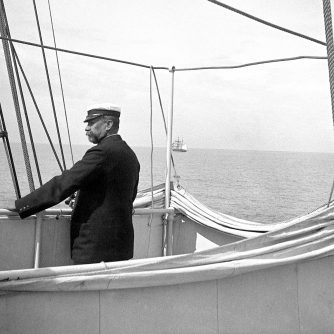
The experiments highlighting the biological manifestations that have led a7> led to the discovery of anaphylaxis, i.e. the paroxysm of allergies, began on the ship of Prince Albert I of Monaco, the second Princess Alice. Retracer les étapes permet de confirmer qu’il s’agit bien d’une découverte océanographique.
The Austrian painter and explorer Eugen von Ransonnet-Villez (1838-1926) was the first to use a4> Ransonnet-Villez (1838-1926) was the first to use art to introduce his contemporaries to the underwater world. a10> contemporaries the underwater world in a realistic manner. Sitting in a diving bell, he made a series of a8> sketches of this realm then almost inaccessible. His works have contributed to the scientific exploration of the underwater world and of its inhabitants.
Platinum (Pt) is a critical technological element (CTE) and an emerging environmental contaminant in environmental compartments. a8> compartments of the environment. In particular, in coastal areas, there is still too little data on its concentrations, its distribution and its effects ecotoxicological on organisms. However, historical developments in these environments show a a7> rapid increase in levels of Pt, motivating the need to strengthen the understanding of its a19> biogeochemical cycles.
Plastics undergo degradation processes in the ocean, resulting in the formation of microplastics that pollute 80% of the ocean surface (small particles can also enter directly). The risk to the environment is significant if they are ingested by marine organisms and a possible transfer into the food chain, which could ultimately reach humans.
Another threat is that some of the plastics could spread invasive or toxic species. Their total clearance of the oceans is simply impossible. The solutions involve regulatory measures, changing consumer behaviour, increasing recycling, promoting the circular economy.
Walter “Zarh” Howlison Pritchard (1866-1956) was the first painter to don a diving helmet, weigh down his easel with lead, and create oil paintings beneath the sea.
In the early 20th century, he turned his attention to painting underwater scenes, from the warm waters of Tahiti to the icy seas of western Scotland. Today, his paintings take on a poignant quality as a record of once thriving marine environments.
Scattered throughout the decor of the Oceanographic Museum of Monaco, the jellyfish remind us that it was by collecting Pelagia noctiluca that Prince Albert I of Monaco began his career as an oceanographer. Then, in the bathypelagic fauna, the violet-purple colour of the Atolla intrigued him. This is what justifies their presence in the Museum’s decor.
By the time Prince Albert I of Monaco began his campaigns in 1885, the controversy over the famous azoic zone below 500 m had died down. And this is thanks to observations that the Prince considers to be the highlights of the history of biological oceanography, and whose emblematic animals he stages in the mosaics of his Museum.
Some of the decorations in the side panels of the ceiling of the conference room of the Oceanographic Museum in Monaco represent marine animals selected from illustrations in the book Kunst-Formen der Natur published in 1904 by Ernst Haeckel, professor of zoology in Jena (Germany). In the centre of this ceiling, six paintings are allegories of important moments in the career of Prince Albert I of Monaco, the Prince Savant.
An endocrine disruptor is a substance or mixture of substances that alters the functions of the endocrine system. They can be of natural or anthropogenic origin. These compounds will eventually be found in all ecosystems, and ultimately in the marine environment. Their harmful effects in the marine environment are now well established: these compounds can induce developmental and/or reproductive disorders in exposed organisms. They have become a global concern and are considered one of the most serious threats to biodiversity and ecosystem health.
As early as 1959, the Antarctic Treaty, of indefinite duration, reserved the southern region for peaceful and scientific activities only. A territorial “freeze” has been retained. Activities relating to mineral resources other than those carried out for scientific purposes are prohibited. The legal framework for human activities has been strengthened by the adoption of new decisions by States on tourism. Together with the conventions that have entered into force, they form what is known as the “Antarctic Treaty System”. States shall ensure that the cooperation they have successfully established in the Antarctic is sustainable.
Long considered as fatty substances serving as energy reserves, lipids have been recognized as essential constituents of cell membranes, and various advances now give them the status of biochemically active compounds in the cell. Certain lipids contribute to the maintenance of good health and are of interest in the prevention and treatment of pathologies. The extraordinary molecular diversity of marine organisms, often without terrestrial equivalent, constitutes the most original, vast and promising source of biologically active lipids.
Squid include about 290 species. The largest marine invertebrates belong to this group. These molluscs have been increasingly exploited by fishermen since the second half of the 20th century. Most of the 40 species caught complete their life cycle in one year. Their survival in the wild is not well known because their rapid growth means that they cannot be caught for long by the same type of gear. The classic approach, by modelling in order to allocate them to fishing quotas for each fleet, in fisheries biology is not always transposable to these molluscs.
Stained glass windows are located in the library of the Maison des Océans, the Parisian establishment of the Oceanographic Institute, Foundation Albert I, Prince of Monaco. The painting of these stained glass windows was the subject of a study of the technique of their realization. The theme is based on illustrations from the illustrated plates of the German naturalist Ernst Haeckel.
The Maison des Océans in Paris, founded by Albert I, Prince of Monaco, is decorated with a stained-glass window representing eighteen marine animals, reproduced from the plates of Ernst Haeckel’s book Kunstformen der Natur. The selection seems to have been dictated by the Prince’s favourite themes: origin of life, emergence from the water to the earth, symmetry planes, viviparity, protection of the young. At the beginning of the 20th century, these themes were still arguments in support of the theory of evolution.
The OceanoScientific Programme, which was established in 2005, is in line with the global science policy on climate change. The OceanoScientific Campaign consists of a series of expeditions around Antarctica, on a specially designed sailboat, equipped with sensors for about ten parameters. This sailboat evolves at the ocean-atmosphere interface without polluting its environment, nor diverting the wind, nor distorting the temperature readings of the surface sea water. It is also able to move on the ocean, in total energy autonomy. The inaugural expedition left Monaco on November 17, 2016, led by Yvan Griboval solo.
DORIS is a participative website from the French Federation of Underwater Studies and Sports. From its conception, it was also intended to become an educational tool, as a source of information and photographs, at the service of FFESSM executives. The idea of an illustrated file of underwater species as exhaustive as possible was born from an observation: the vast majority of current fauna guides present 80% of the same species. It is often difficult to find information to help determine a less common species that nevertheless arouses curiosity!
Born in 1882 in Lamballe, Mathurin Méheut enrolled at the age of 20 at the School of Decorative Arts in Paris and at the Normal School for Teaching Drawing. He began to approach the marine environment in 1910. In 1913, he participated in the first animal painters’ exhibition and acquired the title of animal painter. Méheut’s art was largely inspired by the reality of the marine world and its biodiversity. As a craftsman and naturalist observer, Méheut was able to combine scientific truth with an aesthetic form of harmony.
The living marine world can be considered as a natural deposit rich in a wide variety of compounds and biologically active molecules, often without terrestrial equivalents. Marine organisms live in very different conditions and can sometimes be exposed to extreme conditions. They produce a wide variety of substances with specific activity, in particular lipids, major sources of metabolic energy and essential materials for the formation of cell and tissue membranes. This synthesis presents the main classes of marine lipids, of interest in human nutrition and health, and their sources.
The development of fisheries has resulted in a massive impact on the living resources of the sea and a sharp decline in the abundance of target species. The challenge is to limit the impact of fishing on resources and ecosystems. It belongs to decision-makers in politics to choose a a7> objective of management considered as desirable and sustainable.
The assessment of stocks is carried out by groups of experts, convened each year at the initiative of international organizations progressively established in a26> all the oceans of the world.
Aggregates are the second most consumed natural resource in the world, and include mainly sand and gravel. They form on geological time scales. The exploitable resources of sand and aggregates are limited and non-renewable. The world consumption of aggregates is growing and reaching colossal values. Siliceous aggregates are mainly used for construction, beach nourishment and coastal protection, land reclamation, roads and railways, and drainage. The limestone aggregates are used for the amendment of agricultural land.
Atlantic bluefin tuna migrate extensively between the cold regions where they feed and the warmer regions where they spawn. A very fertile species, it can live up to 40 years. In the Mediterranean basin, it has been exploited since the Neolithic period. Atlantic bluefin tuna is exploited by more than 20 countries. The boom in the sashimi market has led to overexploitation. The International Commission for the Conservation of Atlantic Tunas adopted a recovery plan for eastern Atlantic and Mediterranean bluefin tuna in 2007, which has led to an improvement in the situation.
Marine litter is defined as any persistent solid material that is manufactured or processed and left or abandoned in the marine environment. This is a complex problem with important consequences for the marine and coastal environments and the human activities that take place there. This waste comes from many sources and generates a wide range of environmental, economic, health and socio-cultural impacts, as well as on safety at sea.
Invasive species are generally known to proliferate and compete with native species or those exploited by humans. Eradicating them or controlling their biomass is a very expensive and long-term challenge. However, the biomass of certain species, such as grateloupe and crepidula, which is available in large quantities and renewable, could be of great economic interest and become a source to exploit.
The contribution of coastal zones to sustaining the ecosystems that enable the development of most of the human societies that live there is important. Since 1993, the Land-Ocean Interactions in the Coastal Zone (LOICZ) programme has evolved from a project originally based on biogeochemical fluxes to include the challenge of sustainability of socio-ecological systems in the coastal zone. Renamed the Land of the Future – Coasts project, it is entering a new era of research to provide knowledge and support for transformations towards a sustainable world.
The first sailing story is the famous journey of Ulysses in the Mediterranean, a journey so wonderfully recounted by Homer almost three millennia ago. Recognized as the first literary masterpiece, the Odyssey features the mythical hero grappling with the vicissitudes of a sea voyage, which, while adding an epic note, is above all an extraordinary description of the sea.
One of the major consequences of climate change is the rise in sea levels, caused mainly by the thermal expansion of the oceans, the melting of polar ice caps and mountain glaciers. Over the next few decades, climate scenarios indicate that a9> this process will continue and accelerate.
The rise in sea levels poses a threat to low-lying a21> low-lying and densely populated coastal areas, which will then be more exposed to the risks of erosion, of flooding and saline intrusion into the aquifers. It also raises the question of the future of the low-lying islands, especially the atolls.
Sometimes during the spring and summer, the sea gets colored and cloudy. Some beaches are covered with whitish, foul-smelling moss deposits, dead fish or green algae deposits… These nuisances are the various symptoms of a malfunctioning marine coastal ecosystem subjected to increasing inputs of nutrients of human origin: the sea is suffering from an excess of nutrients. The phenomenon is called anthropogenic or cultural eutrophication.
The protection of coastal and marine areas is generally intended for practical purposes, although generally the main focus is on the protection of biodiversity. The sustainable use of marine resources requires that certain areas be maintained in their natural state. Safeguarding habitats critical to fish production, preserving genetic resources, protecting scenic sites and benefiting from natural heritage all require protection management, as well as appropriate regulations and legislation. The main tool is the establishment of marine protected areas, with different degrees of restrictions and types of management.
During the tsunami of March 11, 2011, 50-foot waves hit the Fukushima-Daiichi nuclear power plant, causing major damage to the entire power grid. The uncooled fuel rods overheated, producing hydrogen gas. Hydrogen explosions resulted in fuel melting. Radioactivity was released, prompting an extensive evacuation operation. The liquid discharges have caused ongoing contamination of the marine environment, and ocean currents have carried radionuclides into the Pacific Basin. Contaminated groundwater near the nuclear plant has been a major concern.
The United Nations consists of a central core around which specialized agencies and affiliated organizations revolve. UNCLOS is the major legal instrument for addressing ocean governance. The IMO deals with issues relating to maritime transport. FAO is the competent international authority for setting technical standards for fisheries, UNEP plays a similar role in environmental protection and regional coordination of the seas, and UNESCO’s IOC deals with oceanography and marine technology. Other UN organizations have an interest in the oceans.
The marine environment contains almost all living phyla. This legacy of a long evolutionary history makes the marine environment a gigantic genomic repertoire. To date, marine genetic resources are only partially covered by existing conventions and protocols. Research and development of marine biotechnology is essential, but there is also a need to establish a governance framework that restores ethics, equity and consistency in its exploitation. In the situation of accelerated degradation of marine ecosystems, this solution, on which our capacity to protect them also depends, is urgent.
Since April 14, 2006, French marine nature parks aim to protect the sea while promoting the sustainable development of local maritime uses. The first natural marine park was created in 2007 in Iroise. After a phase of consultation with local stakeholders, every marine nature park is created by an interministerial decree. The parks depend on the Marine Protected Areas Agency (now integrated into the French Agency for Biodiversity), under the supervision of the Ministry of Ecology. Some parks and study missions have a cross-border identity by nature.
Sustainable use of the ocean requires understanding it before using it. It is vital to acquire reliable data at selected points in the world ocean to identify changes related to natural phenomena or those related to human activities. This need for time series made it necessary to launch the challenge of multidisciplinary underwater observatories. ESONET aims to prepare the implementation of seabed observatories at 12 sites in Europe. The next step is to federate these multidisciplinary underwater observatories and build new ones; this is the role of EMSO.
Operational oceanography now provides information on the “ocean as it was”, “ocean as it is” and “ocean as it will be” tomorrow. Technological advances in satellite observation, autonomous at-sea measurements and scientific computing, combined with the development of complex mathematical models and assimilation techniques, gave rise to this new component of oceanography some 15 years ago. The fields of application of operational oceanography naturally respond to major climatic, ecological and socio-economic issues.
In the sea, chemical communication systems are an indispensable element in the establishment of intra- and interspecific relationships. Moreover, the vector function of water favours chemical communication phenomena. Marine biodiversity and the resulting chemical diversity are mobilizing a growing number of research teams, and major pharmaceutical companies are looking into this pool of molecules. The persistence of chronic or acute forms of certain diseases and the emergence of resistance phenomena mean that the need for new-generation drugs is topical. The oceans are a resource that is still under-exploited.
The Commission on the Limits of the Continental Shelf is one of the three organisations explicitly created by the United Nations Convention on the Law of the Sea of 10 December 1982. The needs that led to its establishment are related to the evolution of the continental shelf as a legal concept and the need to establish the outer limits of coastal States in this maritime area, separating the seabed and its subsoil that are to be considered under national jurisdiction (continental shelf) from those that are beyond national jurisdiction and are therefore included in the Area.
Near-shore macro-algae blooms are the most widely known cases of marine eutrophication. Eutrophication can be summarized as the production and accumulation, following a significant nutrient enrichment of the environment, of a plant biomass that is excessive in relation to the biological consumption or physical evacuation capacities of the ecosystem. These blooms are widespread throughout the world. The stagnation of high algal biomasses leads to their death and bacterial degradation. A life-threatening health hazard is created by rotting algae deposits.
The term “model organism” is reserved for a few species used by a large number of researchers. However, a host of marine organisms have contributed to important discoveries. Their initial importance has diminished over time as reference models have become more and more prevalent in research and teaching programs. Developing models in all branches of the tree of life is necessary because we never know if the knowledge established in model species applies to all organisms.
The United Nations Convention on the Law of the Sea divides the ocean into six major maritime zones. Four of these areas are under the jurisdiction of the coastal State. The other two correspond to maritime areas beyond national jurisdiction: the high seas and the area of the seabed beyond the continental shelf, known as the Area. The Area has the status of a common heritage of humanity. The International Seabed Authority is an autonomous international organization through which States Parties to UNCLOS organize and control activities in the Area.
Coral reefs are underwater formations made up of a tangle of limestone skeletons belonging to the organisms that build them. Reef-building corals form colonies composed of a large number of entities called polyps. There are two categories of coral reefs: cold-water reefs and tropical reefs.
The main types of reefs are fringing reefs, barrier reefs, and atolls.
Prey are the only food for corals in cold waters. In contrast, tropical corals harbour microscopic algae inside their digestive cells. This mutually beneficial association is a symbiosis.
New chemical molecules are constantly being synthesized and are potential sources of harm to the environment, particularly the marine environment. Solid waste can physically reach organisms. They degrade slowly in the ocean into very small particles that, when ingested, contribute to chemical contamination. A more insidious threat comes from repeated exposure to low doses of pollutants. The action of these pollutants may be immediate or may only become apparent in the long term.
The role of scientific mediation does not only involve the popularization of knowledge. Today, knowledge alone is no longer sufficient to deal with the complex problems facing our societies. Behavioural changes are essential for the preservation of the oceans. Contemporary mediation develops a more dynamic educational policy, based on awareness, dialogue and action. Its mission becomes broader, it becomes the interface between the scientific world, the public, civil society, political and economic decision-makers and the media.
Launched in 2000 by the Intergovernmental Oceanographic Commission and the World Meteorological Organization, the Argo program aims to develop a global network of 3,000 autonomous profiling floats that measure the temperature and salinity of the upper 2,000 meters of the ocean in real time every 10 days. Argo is the first global real-time in-situ ocean observation network. This is a real revolution in global ocean observation. In just a few years, Argo has become the most important source of data for researchers interested in studying the ocean and its role in climate.
In ancient times, the nuisance caused by jellyfish prompted Aristotle to give them the name “cnid” (Greek for “stinging”), and as a tribute to them, scientists created the group of Cnidaria to designate all the animals with this function: jellyfish, siphonophores, corals, sea anemones, gorgonians, etc.
In the 1970s, around 50% of the traditional fishing stocks in continental shelves were considered at their maximum sustainable level, or fully exploited. This led to the migration of the fleets to exploit deeper waters in the 1980s and 1990s. The use of intensive trawl technology in deep-sea fisheries was also found to be associated with incidental catch of benthic organisms and habitat disturbance. These fisheries lead to habitat degradation with effects on the local biodiversity and the biomass of the benthic species.
We expect 9 billion people in 2050! Until now, almost all of the energy and mineral resources that humanity has needed have come from the exploitation of land. These resources have been largely exhausted. If we want to keep our lifestyle, our only alternative is to go elsewhere! The easiest way is to go and find the energy we will be dependent on for a long time, as well as metals and rare earths, under the surface of the oceans. In addition to technological and environmental challenges, there is also the problem of appropriate international legislation.
Molecular biology is a recent science. The discovery in 1969 of an enzyme will allow its exponential development by allowing the cloning and sequencing of genes. 17 years later, genomics is a revolution: it has changed our vision of the organization of living organisms, and also shows that an organism constitutes an ecosystem in itself. Marine life is much older and more varied than terrestrial life. By using DNA sequences, it is possible to inventory biodiversity much more easily than by conventional methods and to show that marine biodiversity is largely underestimated.
Marine fisheries have a direct impact on the resources they exploit, but also have indirect effects on other species. For a long time, marine resource management has been conducted on a stock-by-stock basis, neglecting the complexity of interactions within marine ecosystems. By-catches and the destruction of habitats by fishing gear appear increasingly irreconcilable with sustainable fisheries management. A more holistic view of ecosystem management has recently emerged with the ecosystem approach to fisheries…
Like medicine, oceanography is entering the era of tomography, which focuses on the three-dimensional totality of the object under study and its temporal evolution. This revolution in oceanography is based on autonomous underwater robots, whose measurements are coupled with those of conventional mobile and fixed platforms and ocean observation satellites. This coupling results in integrated observation networks.